
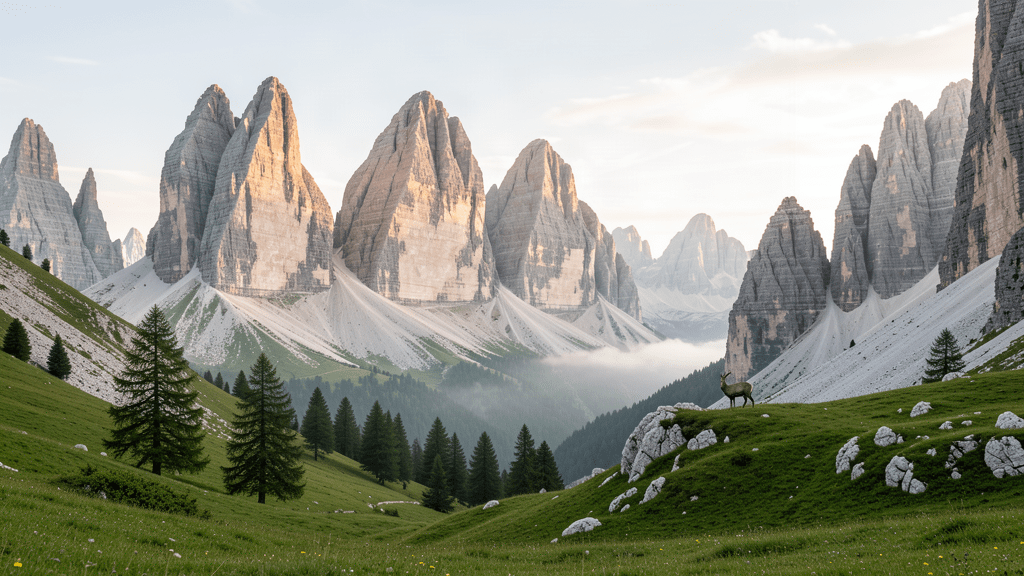
The Dolomites are not simply a dramatic range of pale peaks. They are a mountain landscape built from ancient seafloors, lifted, fractured and patiently sculpted by ice, water and gravity. Today, limestone towers rise above conifer forests and alpine meadows, while marmots, chamois and birds of prey occupy the spaces between the cliffs.
Why the Dolomites Look Like Stone Towers
The Dolomites owe their distinctive profile to Triassic carbonate platforms: marine structures that formed when this part of the Earth lay beneath warm, shallow seas. UNESCO describes the rocks as exceptionally well-preserved examples of Mesozoic carbonate platforms, with fossil evidence of ancient reef-building life. Later tectonic uplift brought those former seabeds into the Alps, where erosion began to expose their layered architecture.
Water follows fractures, frost expands inside cracks, and gravity carries broken material downslope. Glaciers have also carved valleys and passes through the range. The result is a landscape of pinnacles, spires, ledges and vertical walls rather than one smooth mountain mass. Some Dolomite cliffs rise more than 1,500 metres, according to the UNESCO World Heritage Centre.
A Living Landscape Between Rock and Meadow
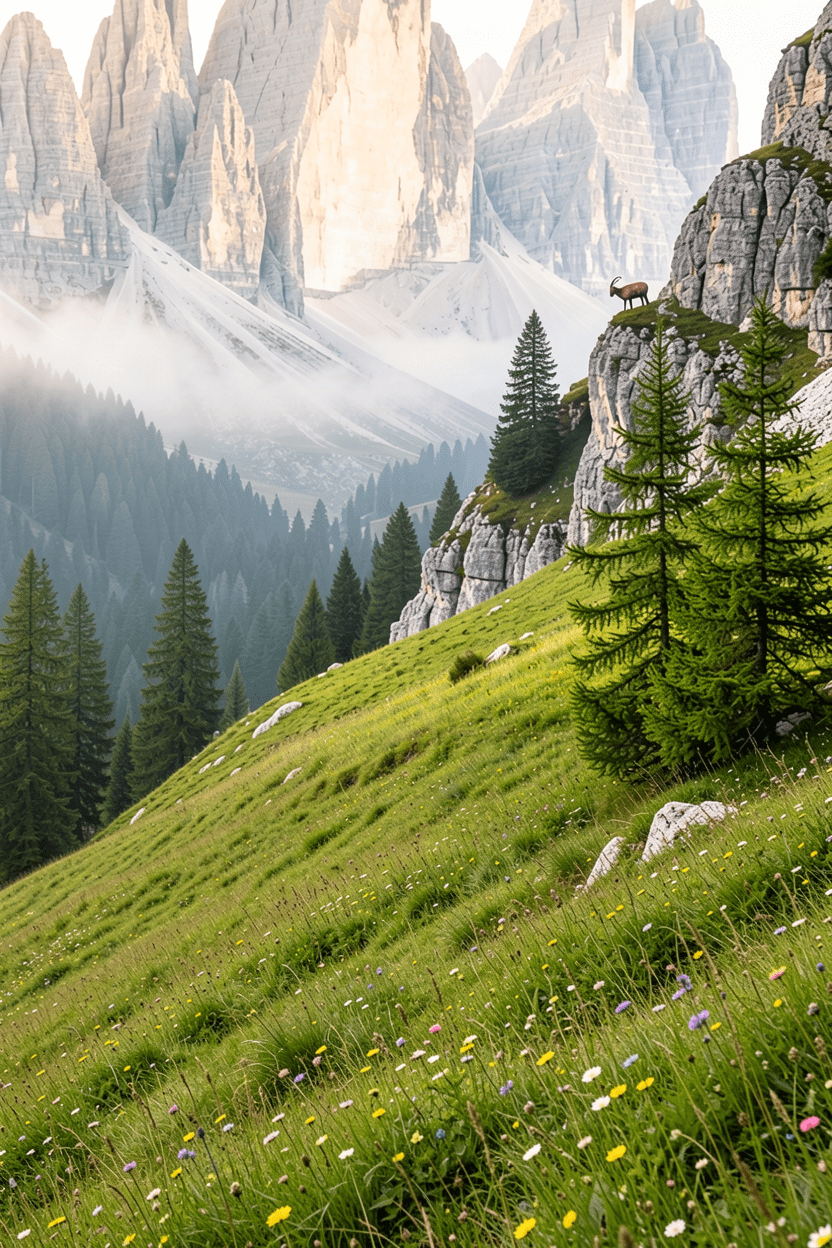
The visible rock is only one layer of the Dolomites. Below the towers, forests and high meadows create a changing mosaic of habitats. Marmots feed and shelter in alpine grasslands, while chamois use steep terrain and rocky ledges. Golden eagles and other birds of prey connect the open slopes with the higher cliffs.
Conservation work in the Dolomiti Bellunesi National Park shows how active protection can shape this living landscape. The park completed a multi-year project to reintroduce the Alpine marmot (Marmota marmota), an animal closely associated with high-mountain grasslands. The project was designed not only to restore a familiar species, but also to strengthen the wider alpine ecosystem.
The Dolomites as an Open-Air Geological Archive
What makes the range scientifically valuable is the clarity of its geological story. In a relatively compact area, the rocks record changing seas, carbonate platforms, volcanic episodes, tectonic movements and later erosion. The pale cliffs therefore function as exposed pages in a book of Earth history—one that can be read in the field rather than only in a laboratory.
This relationship between geology and landscape is part of what makes the Dolomites different from a conventional mountain panorama. The colour, shape and spacing of the peaks are not decorative accidents: they are the visible result of rock composition, ancient marine environments and continuing surface processes.
Why Protection Matters
The Dolomites were inscribed on the UNESCO World Heritage List for both their exceptional beauty and their geological importance. Protection must extend beyond individual viewpoints. Alpine meadows, wildlife corridors, water systems and fragile rock environments are parts of the same connected landscape. Responsible travel—staying on marked paths, respecting seasonal closures and keeping distance from wildlife—helps preserve that connection.
From a distance, the Dolomites seem immovable. Up close, they reveal constant change: frost breaks rock, streams move sediment, plants colonise thin soils and animals adapt to altitude. Their enduring character comes not from stillness, but from the slow interaction of stone, climate and life.