
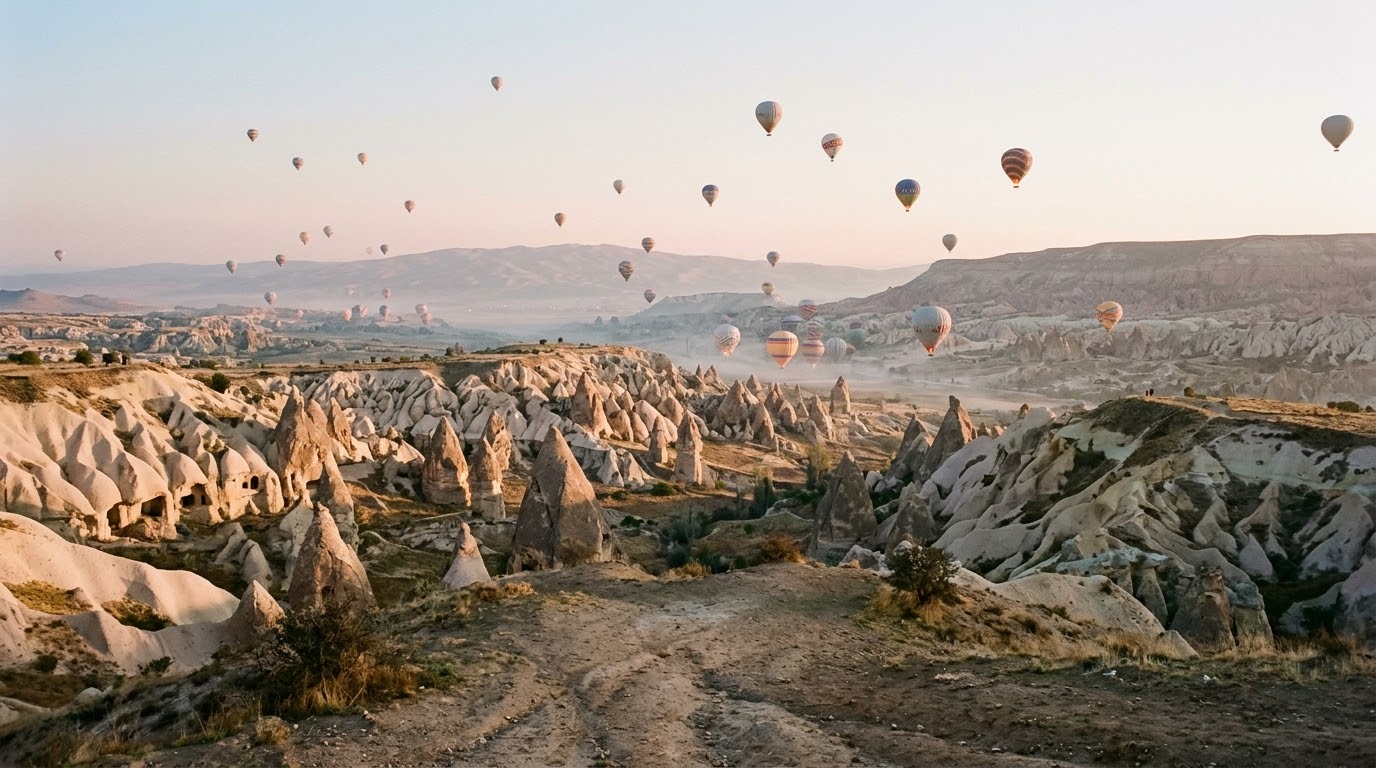
Three questions decide a first trip to Cappadocia: will you fly in a balloon, where will you sleep, and how many days can you spare? This guide answers all three, with prices checked in November 2026, and explains why the valleys you walk through are red, pink or cream — because the whole region sits inside an old volcanic field.
Some links in this article are affiliate links: if you book through them, we may earn a commission at no extra cost to you.
How much does a Cappadocia hot air balloon cost?
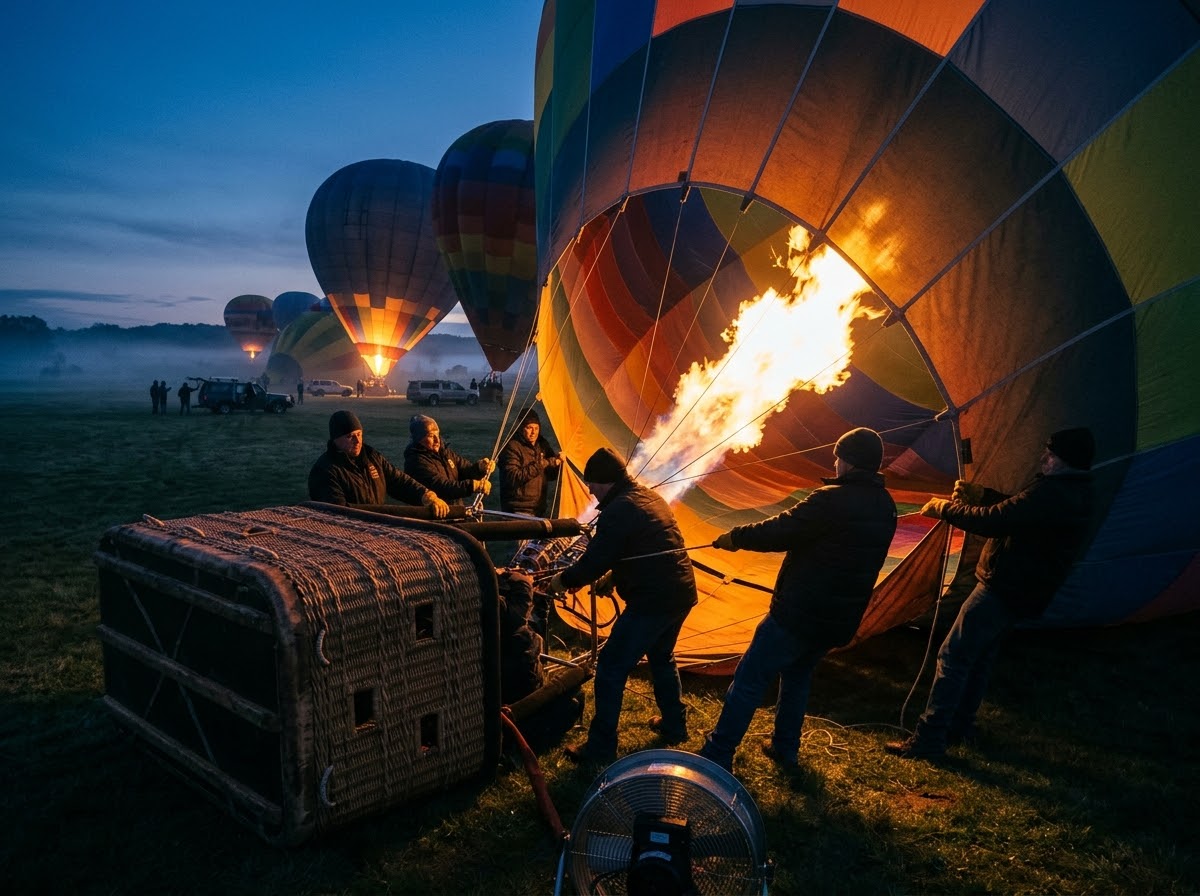
In November 2026 booking sites quote a standard flight at around €150–300 per person. Comfort or deluxe baskets, which carry fewer passengers, run to €250–400, and a private basket starts above €450. Winter flights, from November to March, are usually the cheapest of the year.
| Package | Per person (Nov 2026, booking sites) | What changes |
|---|---|---|
| Standard | ~€150–300 | Full basket, around an hour in the air |
| Comfort / deluxe | ~€250–400 | Fewer passengers, often a longer flight |
| Private basket | €450 and up | Just you and your companions |
Most fares include hotel pick-up, a light breakfast and a small celebration after landing, but this varies by operator — ask what is included before you pay. The €50–100 prices advertised online are usually low-season “from” rates for a short shared flight.
You can compare current flights and prices on Klook and Tiqets; read the cancellation terms before you book.
Flights are cancelled regularly. Balloons launch at sunrise, and permission is granted each morning by the Turkish civil aviation authority (SHGM), whose Nevşehir team assesses wind, fog and rain. Turkish press reports suggest flying is possible on roughly 220 days a year, and winter can bring several grounded mornings in a row. So:
- Book the balloon for the first morning of your trip, so it can be moved to the next day if the flight is cancelled.
- Ask before paying whether the operator refunds the fare or moves your date when the weather turns.
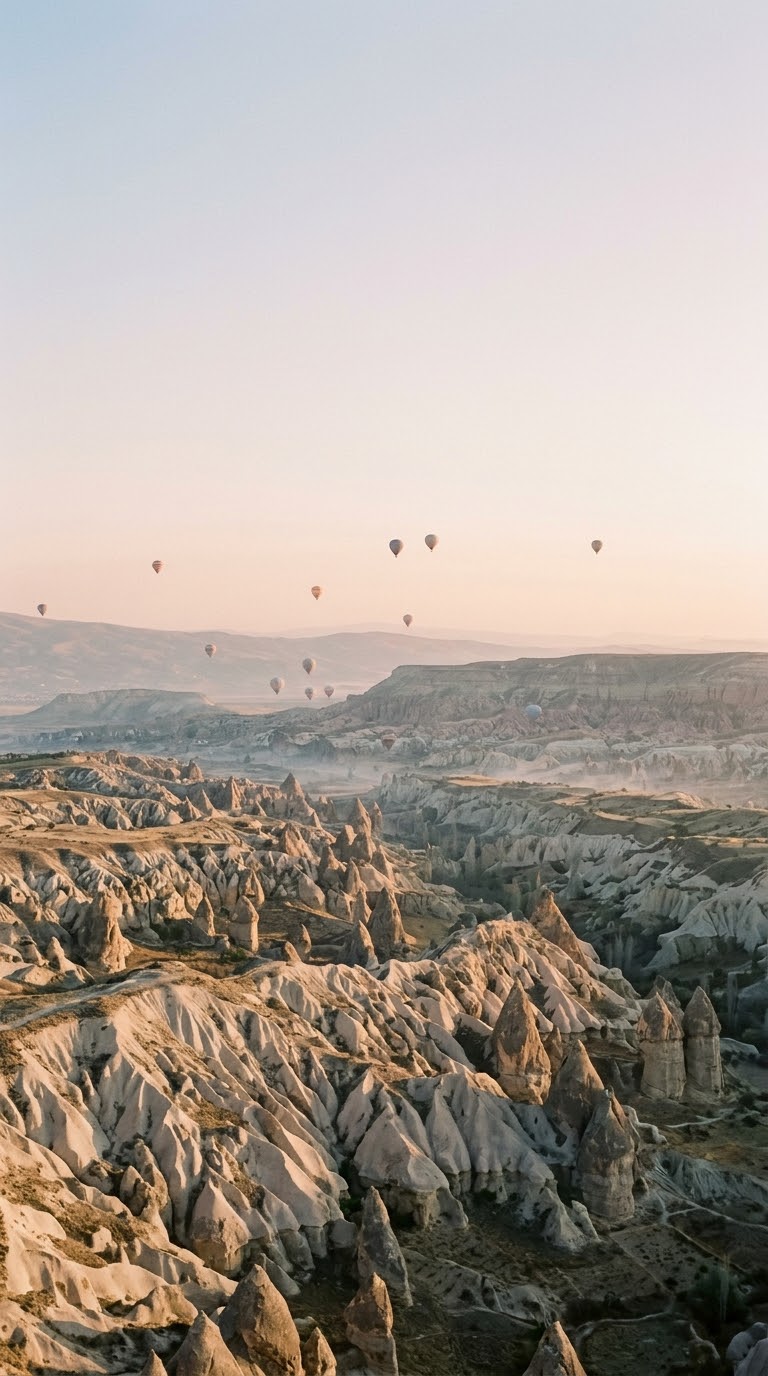
- If you would rather not fly, the viewpoints above Göreme fill at dawn with hundreds of balloons — watching from the ground is free.
Where to stay in Cappadocia
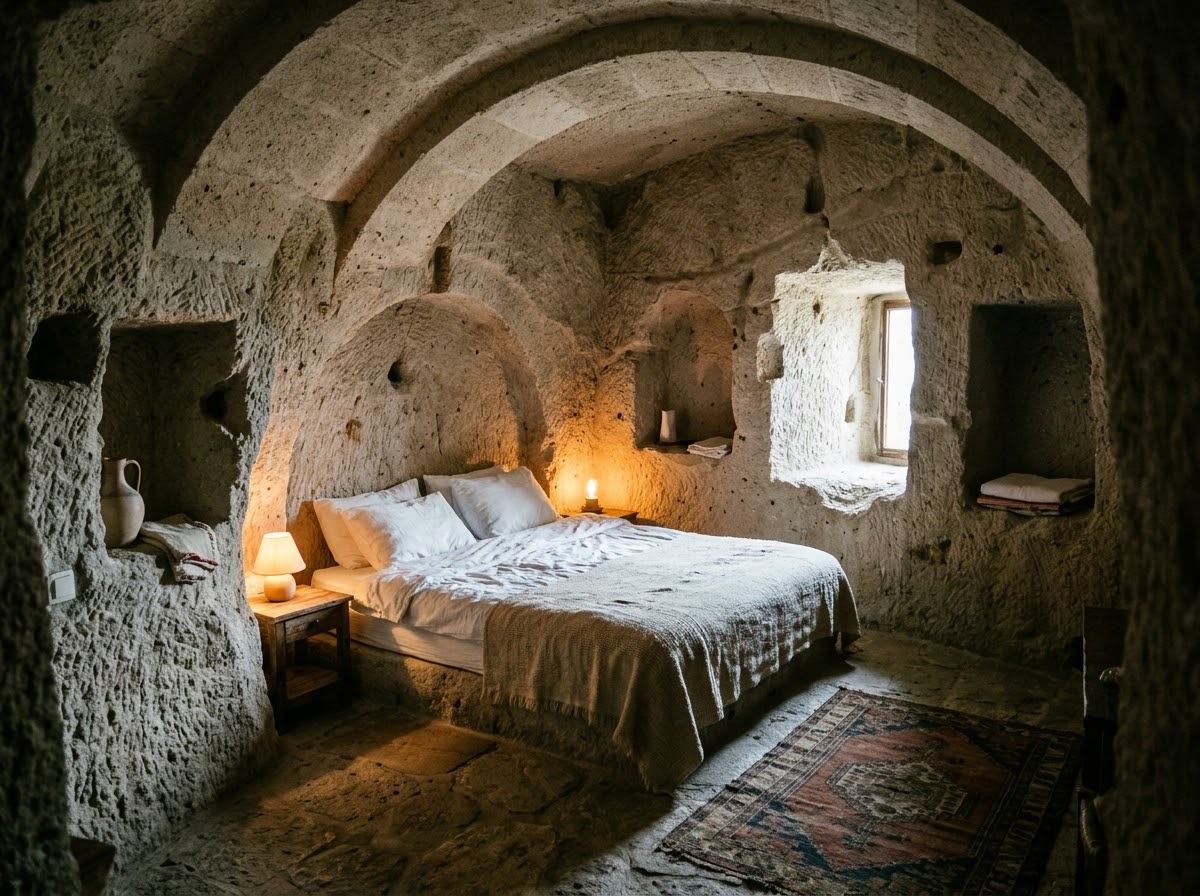
The short answer is Göreme for a first visit: it is within walking distance of the balloon launch sites, the Open Air Museum and the valleys. Choose Uçhisar or Ürgüp if you want somewhere quieter, or Avanos for the lowest prices and the pottery workshops.
| Village | Best for | Note |
|---|---|---|
| Göreme | First visits, travelling without a car | Hotels for every budget; the busiest base |
| Uçhisar | Views | The highest point in the region, below the castle |
| Ürgüp | Restaurants and calm | A larger town; you will want a car for the valleys |
| Avanos | Lower prices and pottery | On the Kızılırmak river, a little further out |
Cave hotels are the region’s signature stay. In November 2026 booking sites listed cave rooms in Göreme from about $40 a night to well over $200; spring and autumn are the most expensive seasons, so reserve early.
There is a geological reason the rock can be carved at all. Tuff is compressed volcanic ash: soft enough to cut with hand tools, and a poor conductor of heat, so rooms stay cooler in summer and warmer in winter than the air outside. People have lived in rock-cut houses here for thousands of years.
How many days do you need in Cappadocia?
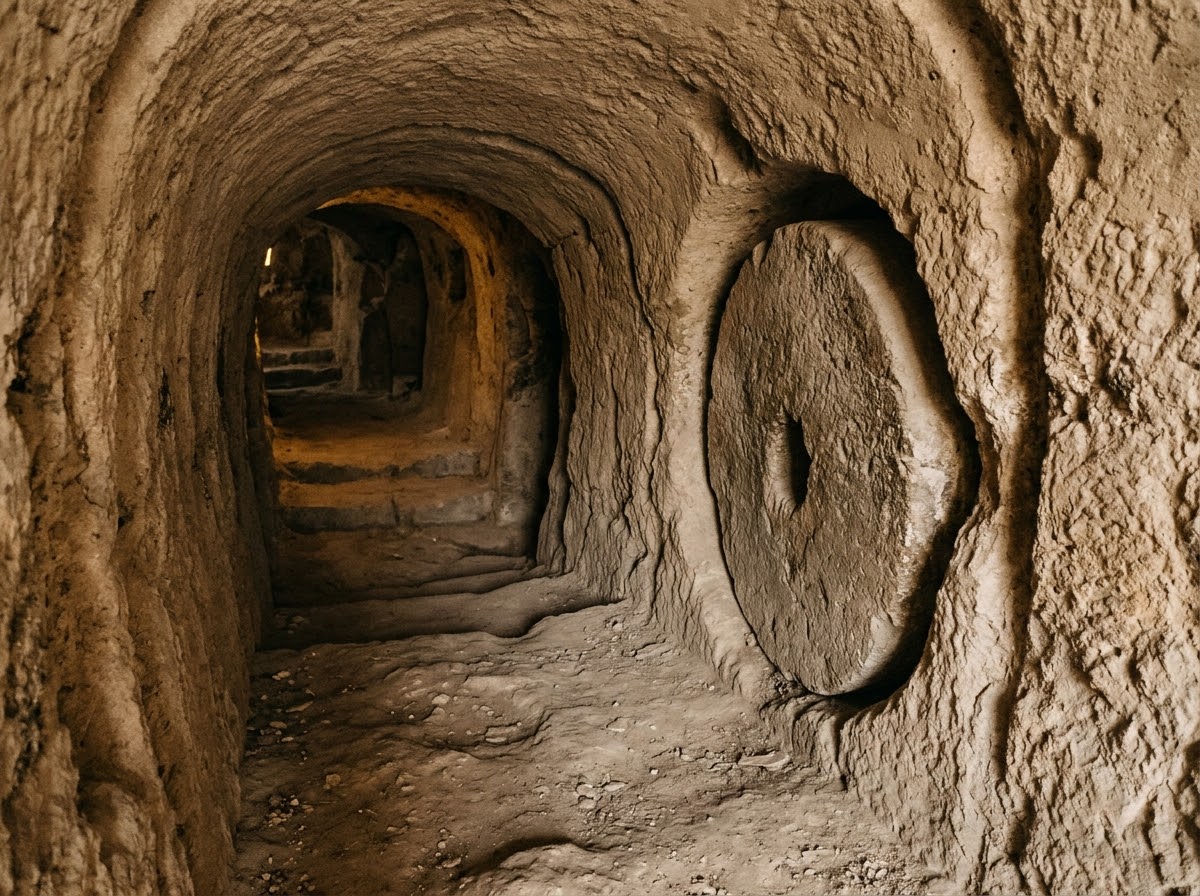
Two full days cover the highlights; allow three if you want to walk the valleys and go down into an underground city.
Two-day plan
- Day one: balloon at dawn, or watch the launch from a viewpoint. Göreme Open Air Museum before lunch, Paşabağ and Devrent valley in the afternoon, sunset at Kızılçukur.
- Day two: Derinkuyu or Kaymaklı underground city, then Uçhisar castle. Evening in Avanos or Ürgüp.
With a third day, add a walk in Güvercinlik or Güllüdere valley and the Ihlara gorge in the south-west. Ihlara is a canyon that the Melendiz river cut through the same tuff, about an hour and a half by car from Göreme.
What to see in Cappadocia
- Göreme Open Air Museum: rock-cut churches covered in frescoes. In 2026 the ticket for foreign visitors is €20; the Dark Church inside is charged separately.
- Derinkuyu and Kaymaklı underground cities: galleries stacked over several levels, with ventilation shafts and store rooms. Queues build up in summer, so go early, and check the current ticket price on the official Derinkuyu and Kaymaklı pages before you travel.
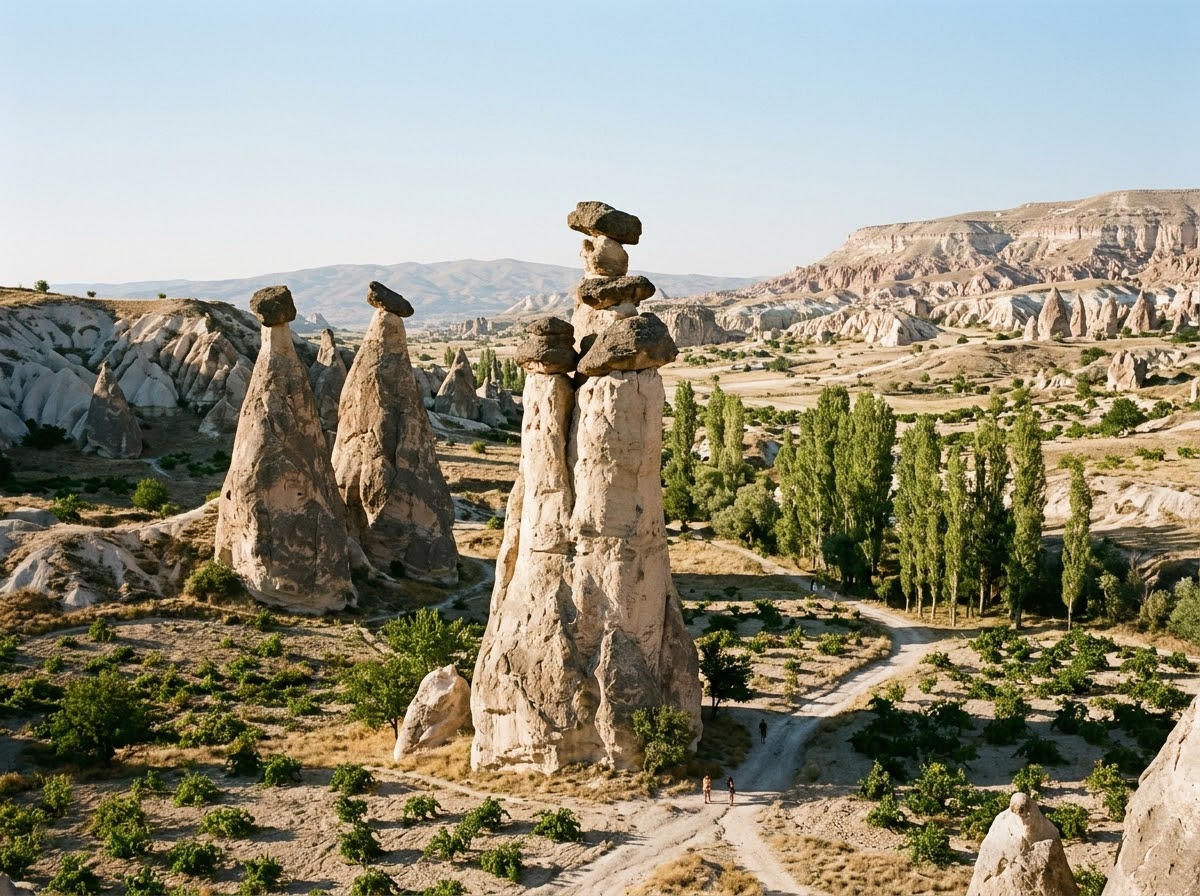
- Paşabağ: the best-known cluster of multi-capped fairy chimneys.
- Devrent valley: wind and rain have carved the tuff into shapes that look like animals.
- Uçhisar castle: a huge rock outcrop hollowed out inside; the top looks over the whole region.
- Kızılçukur and Güllüdere: valleys that turn red and pink at sunset, with footpaths between them.
If you would rather go with a guide, Tiqets lists day tours that include entry to the Göreme Open Air Museum or an underground city.
Why is each valley a different colour?
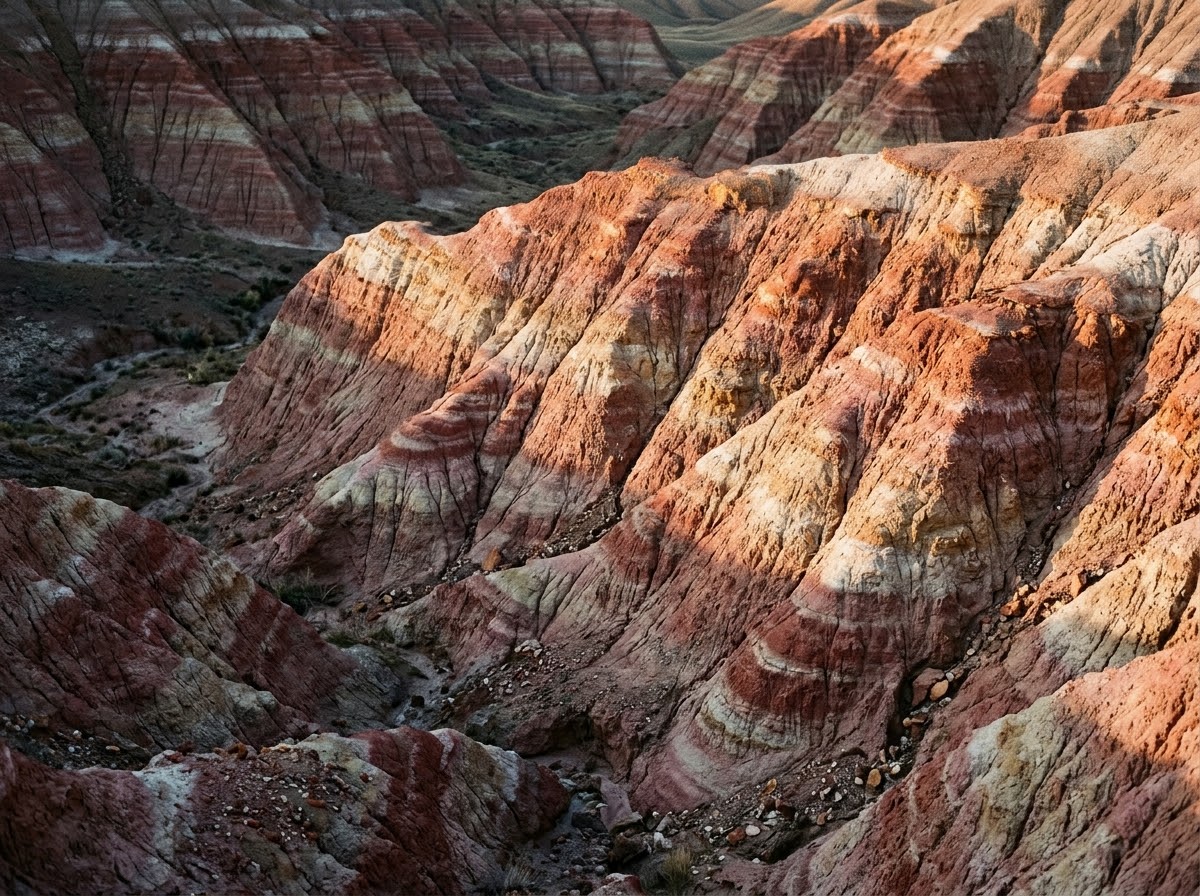
The colours come from ash laid down by different eruptions. The volcanoes that ring the region — Erciyes (3,917 m), Hasan Dağı (3,268 m) and Göllüdağ — threw out ash for millions of years, and each eruption left a layer with its own chemistry, grain size and iron content. Iron-rich layers oxidise to reds and pinks; paler ash reads as white or cream. The red you see at Kızılçukur at sunset is those layers catching the light.
The “hat” on a fairy chimney is the same layering at work. A harder caprock keeps the rain off the soft tuff beneath it, and as the ground around erodes, a cone is left standing. A chimney that has lost its cap wears away much faster than its neighbours.
If you are curious about Turkey’s other geological landscapes, our guide to Lake Salda explains why its white shores and turquoise water look the way they do.
When is the best time to visit Cappadocia?
April to June and September to October are the easiest months: mild air, good walking weather and fewer balloon cancellations than in winter. July and August are hot and busy. Winter, from December to March, is beautiful under snow and cheaper for both hotels and balloons, but fog and wind ground the balloons more often.
Getting to Cappadocia from Britain
Most travellers from the UK fly to Istanbul, then a domestic flight to Kayseri (ASR) or Nevşehir-Cappadocia (NAV). Nevşehir is about 35–40 km from Göreme; Kayseri is about 75–80 km away but has far more flights, which is why most visitors land there.
Most hotels arrange a transfer to match your flight; a private car from Kayseri takes roughly 70–80 minutes. There is no direct bus from Kayseri airport to Göreme: you go to Nevşehir bus station and change, which can take over two hours. Because the sights are spread out, hiring a car for two or three days makes the trip much easier. Check the FCDO’s travel advice for Turkey before you book.
To have mobile data from the moment you land, you can install a Turkey eSIM before you travel (Yesim). Yesim itself notes that its website and app may be hard to reach from inside Turkey, so buy it before you leave.
Frequently asked questions
How much is a balloon flight in Cappadocia?
In November 2026 booking sites quote around €150–300 per person for a standard flight, €250–400 for comfort packages and from €450 for a private basket. Winter prices are lower.
What happens if my balloon flight is cancelled?
Permission is decided each morning by the Turkish civil aviation authority according to the weather. If the flight is cancelled, most operators move you to the next day or refund the fare — confirm which before you book.
How many days should I spend in Cappadocia?
Two full days cover the main sights. Add a third for a valley walk and an underground city.
Is it worth staying in a cave hotel?
Yes, if you want the region’s signature experience: rooms cut into soft tuff stay cool in summer and warm in winter. Expect from about $40 to over $200 a night in Göreme.
Which airport should I fly into for Cappadocia?
Nevşehir-Cappadocia (NAV) is closest, 35–40 km from Göreme; Kayseri (ASR) is 75–80 km away but has more flights from Istanbul.
Prices were compiled in November 2026 from booking and sales sites; they vary by season and operator. Check the current price before you book.