
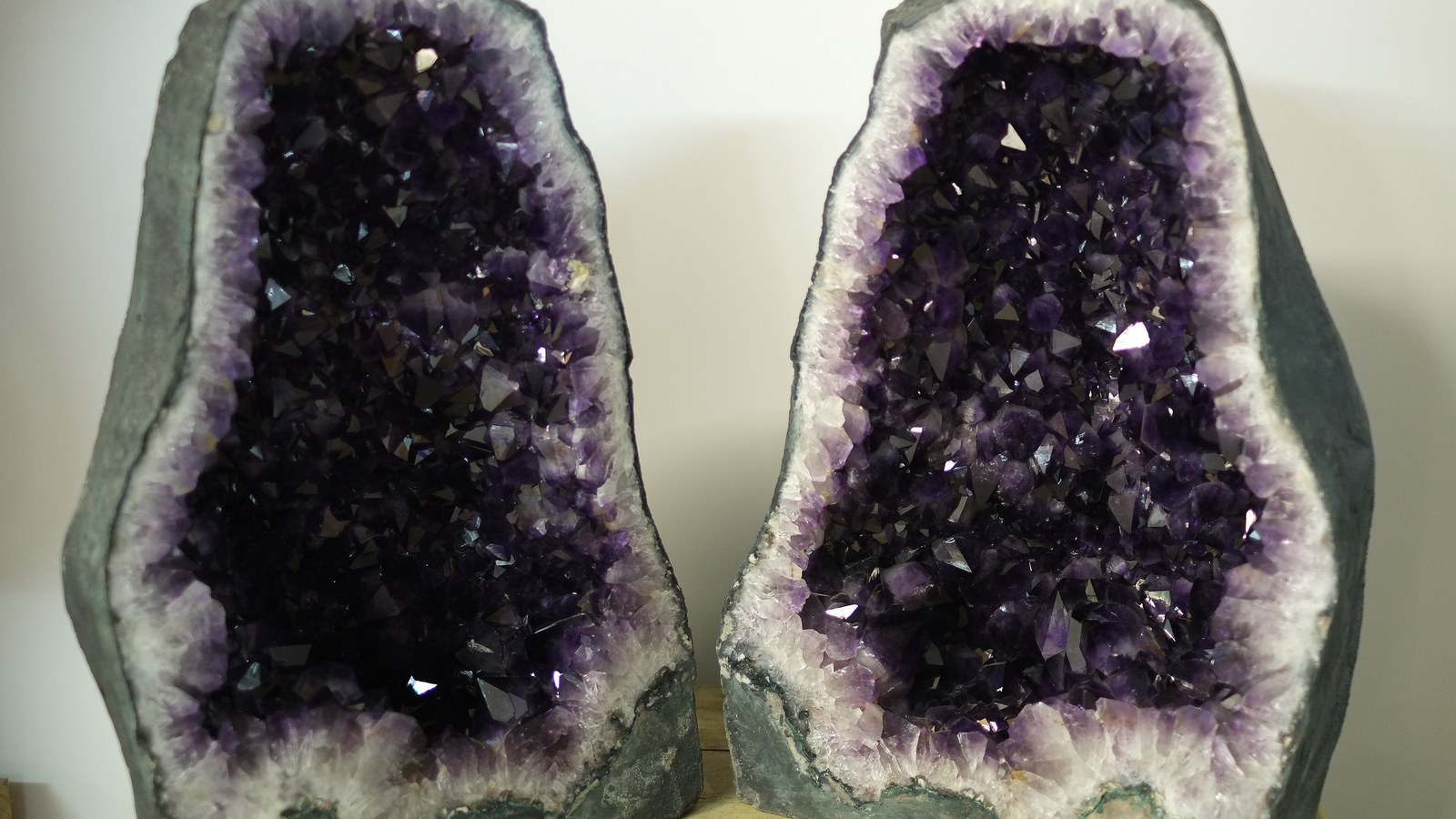
Quartz is the second most abundant mineral in the Earth’s crust, after feldspar. Made of silicon and oxygen (SiO₂), it comes in a striking range of colours: clear, white, pink, purple (amethyst), yellow (citrine) and smoky brown. It makes up roughly 12 per cent of the continental crust.
This guide covers quartz’s physical properties, its main varieties, the piezoelectric effect that keeps watches on time, why gold can sit in the same vein, and where quartz is found in Britain. If you are buying quartz jewellery, our guide to quartz jewellery explains what to look for.
Physical Properties
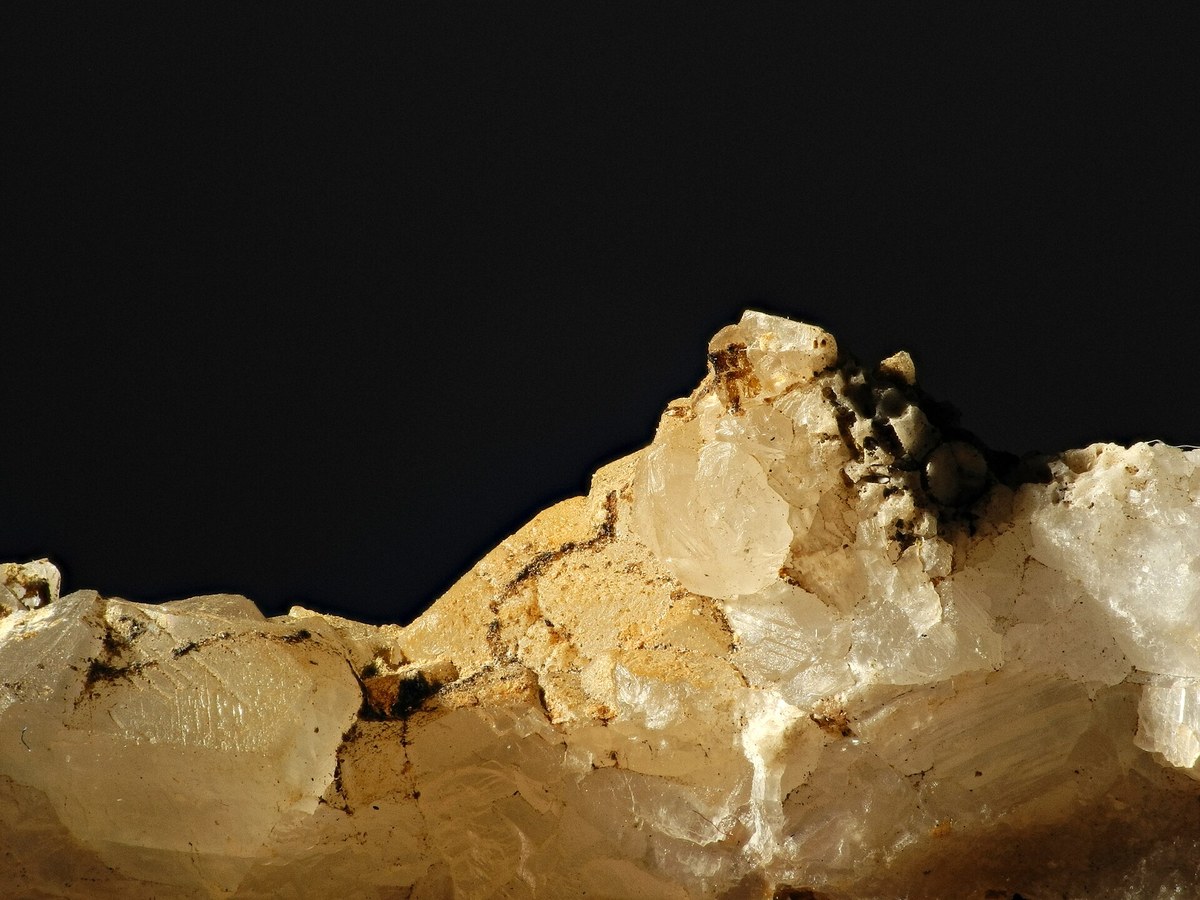
With a hardness of 7 on the Mohs scale, quartz is tougher than a steel knife blade. It crystallises in the trigonal system (part of the hexagonal crystal family) and, in good conditions, grows as six-sided prisms. Its refractive index is 1.544–1.553 and its specific gravity 2.65. Transparent to translucent, with a glassy lustre, it is easy to recognise once you know what to look for.
Varieties of Quartz
Clear quartz crystals are known as rock crystal, the purest form of the mineral. Trace elements, defects in the crystal lattice or tiny inclusions of other minerals give quartz its other colours and looks:
- Amethyst: purple, caused by iron impurities and natural radiation. One of the most valued varieties; more in our amethyst article.
- Citrine: yellow to orange. Natural citrine is rare; most citrine on the market is heat-treated amethyst.
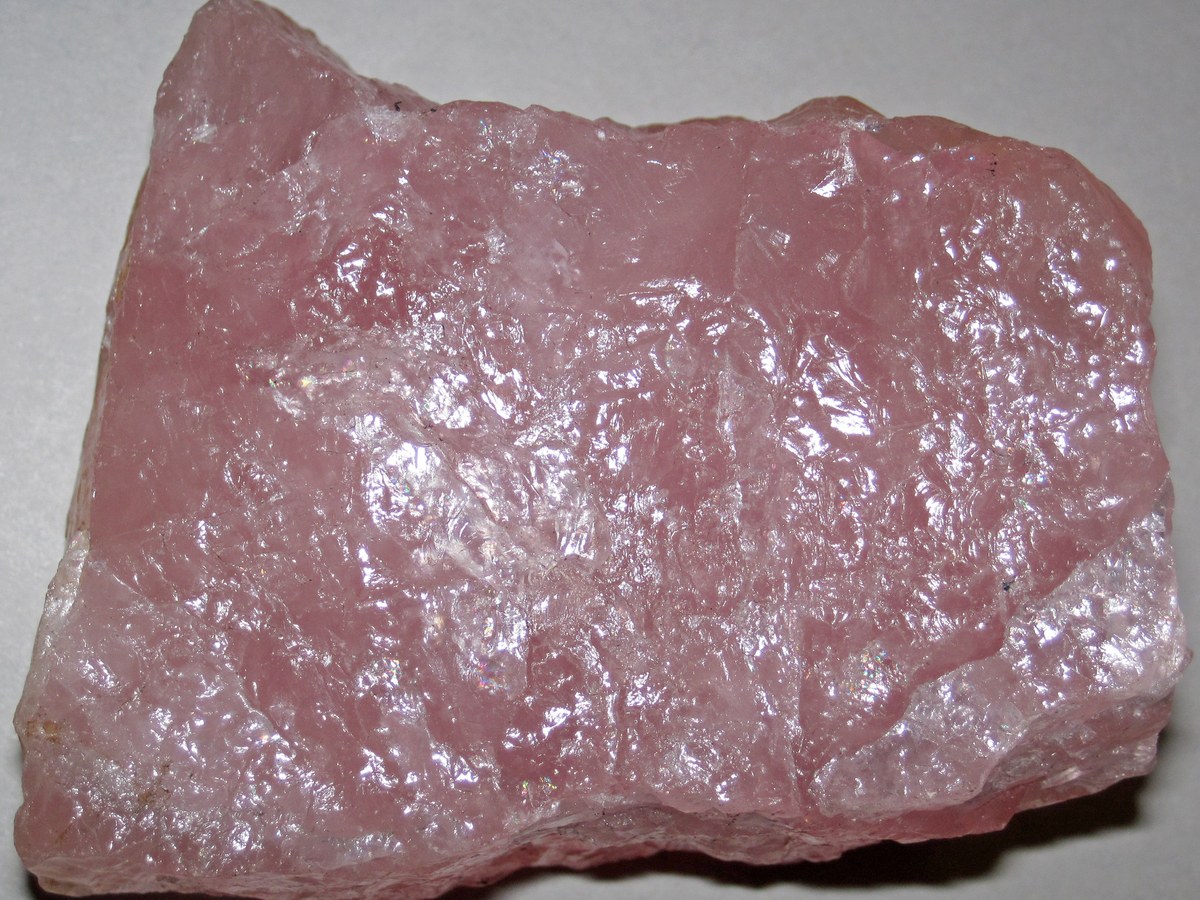
- Rose quartz: research links the pink of massive rose quartz to microscopic fibres of a dumortierite-like mineral, coloured by charge transfer between iron and titanium. The older explanation, titanium and manganese, has given way to this work. It is usually massive; crystals are rare.
- Smoky quartz: brownish grey, from colour centres formed where aluminium replaces silicon in the lattice and natural radiation acts on it. Strong heat bleaches the colour.
- Milky quartz: white because of microscopic fluid and gas inclusions. The most common form of vein quartz.
- Rutilated quartz: clear quartz containing fine golden or reddish needles of rutile (titanium dioxide).
- Herkimer “diamond”: despite the name, it is quartz: a trade name for very clear, short, double-terminated crystals from Herkimer County, New York.
- Chalcedony and agate: quartz made of crystals too small to see (microcrystalline). Banded varieties are called agate.
Stones sold as “strawberry quartz” or “blue quartz” are sometimes natural quartz and sometimes glass or dyed material. The name alone does not tell you what the stone is.
The Piezoelectric Effect
Quartz’s most remarkable property is piezoelectricity: squeeze it and it produces an electric voltage. Pierre and Jacques Curie discovered the effect in 1880. Today quartz crystals keep time in watches, radio transmitters, computer clock chips and precision oscillators. A quartz crystal vibrating 32,768 times a second sits at the heart of a digital watch.
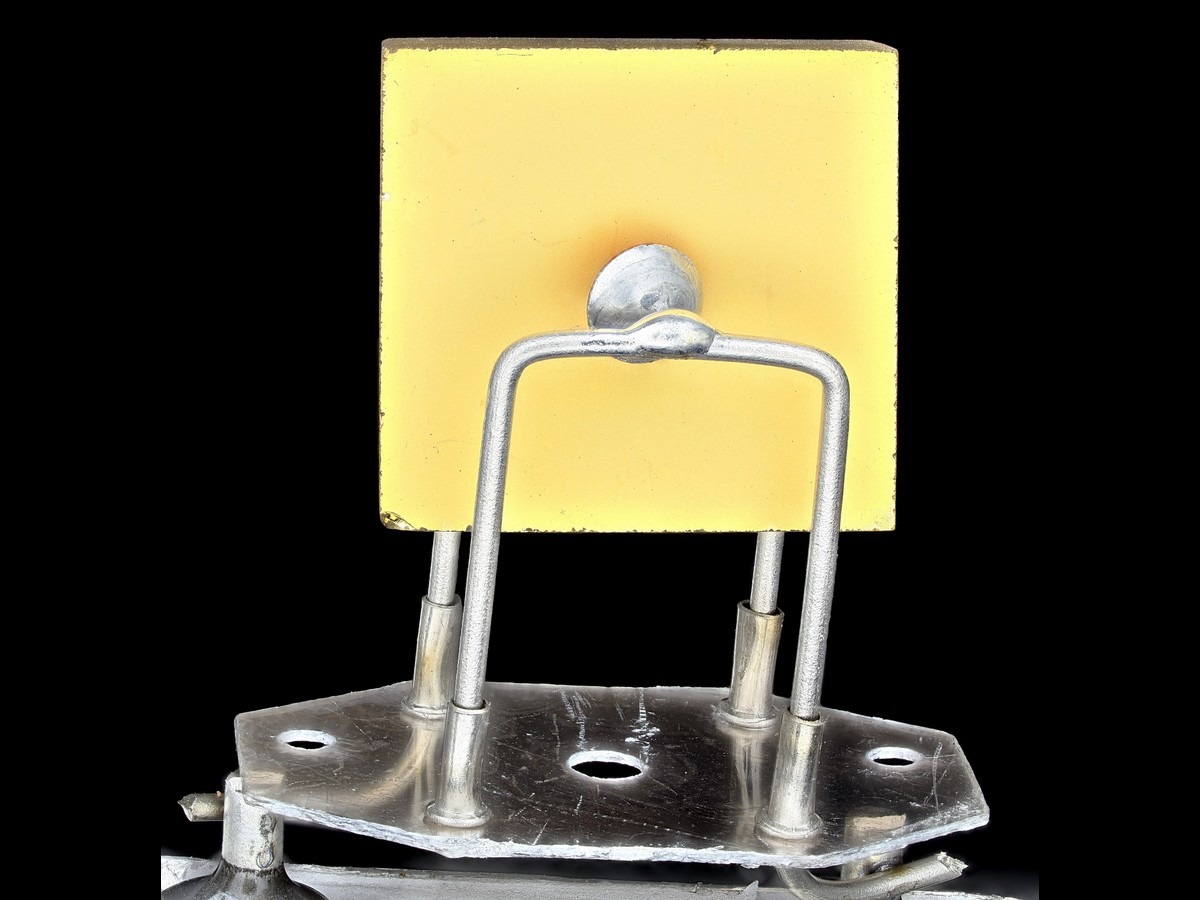
That figure, 32,768 Hz, is the resonant frequency of a crystal cut and mounted for a particular circuit. It does not mean quartz always vibrates at that rate: change the crystal’s size, cut or circuit and the frequency changes too. Watchmakers use 32,768 because it is 2 to the power of 15, so a counter can halve it repeatedly to arrive at exactly one second.
Can Quartz Contain Gold?
Quartz and gold often occur together in hydrothermal veins. As hot, mineral-rich fluids move through cracks in rock they can deposit quartz, and in the same process gold may collect in the fractures of quartz veins, along grain boundaries or together with sulphide minerals. So not every quartz vein is worth prospecting, but quartz is an important geological clue to how some gold deposits form.
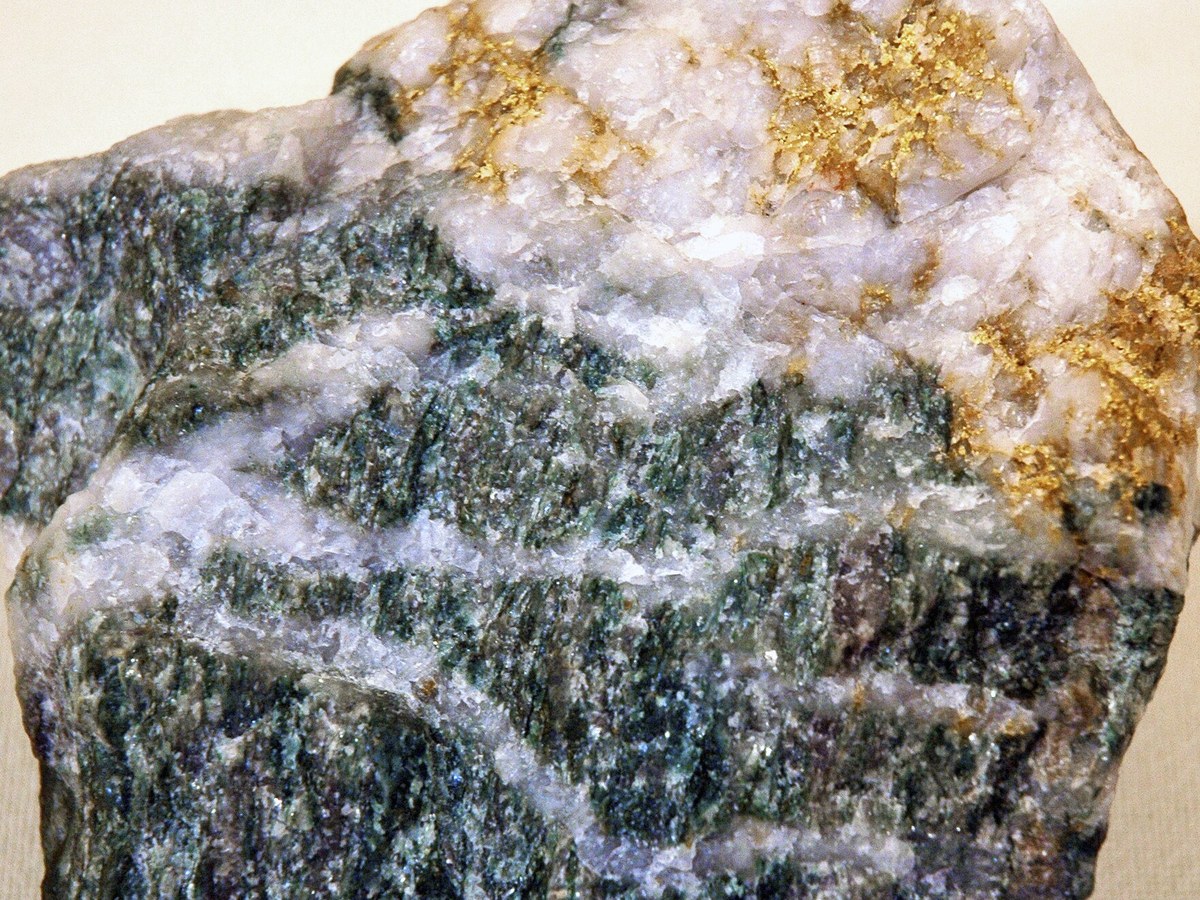
The short answer: it can, but most quartz contains none. Gold-bearing quartz veins form in particular settings. One is the orogenic vein, left by hot fluids rising along deep faults during mountain building. Another is the epithermal vein, formed by near-surface hot-water systems in volcanic regions. Britain’s best-known example is Dolaucothi in Carmarthenshire, the only known Roman gold mine in the UK: there the gold sits with pyrite and arsenopyrite in a network of quartz veins cutting black shale. The Romans began large-scale mining around AD 70–80, and the last workings closed in 1938.
Gold is rarely embedded in quartz as large grains. More often it lies along fractures and grain boundaries in the quartz, or inside pyrite as particles too small to see. Even in a rich vein, you often cannot see gold with the naked eye. There is no shared “energy frequency” between quartz and gold either; the link between them is purely geological.
Are the shiny yellow grains in quartz gold?
Most likely they are pyrite. Known as “fool’s gold”, pyrite is the sulphide mineral most often found in quartz veins. Simple ways to tell them apart:
- Hardness: gold is very soft (Mohs 2.5–3); press a pin into it and it dents. Pyrite is hard (Mohs 6–6.5) and a steel pin will not scratch it.
- Streak: rubbed on unglazed porcelain, gold leaves a yellow streak, pyrite a greenish-black one.
- Shape: pyrite usually forms sharp-edged cubes; gold appears as irregular flakes, wires or nuggets. Gold looks equally yellow from every angle, while mica flakes and pyrite flash and fade as the light changes.
Can gold be extracted from quartz?
Industrially, gold-bearing quartz ore is crushed and the gold recovered by gravity separation and chemical leaching. The mercury and cyanide used in home attempts are highly toxic, and in most countries prospecting and mining need permission from whoever holds the mineral rights. If you are curious about a stone you have found, showing it to a geologist or a university geology department is the sensible route.
History and Cultural Significance
Quartz has mattered to people since antiquity. The ancient Greeks called it krystallos, “ice”, believing clear quartz to be frozen water. The Romans prized rock crystal for its cooling feel, and quartz was among the stones used for Egyptian scarab amulets. In the Middle Ages, crystal balls were the favoured tool for fortune-telling.
How Quartz Forms
Quartz can form in igneous, metamorphic and sedimentary rocks. It is a main component of granite and other silica-rich igneous rocks, and grows as large crystals in hydrothermal veins and pegmatites. The largest quartz crystals have come from pegmatites in Brazil and Madagascar; some weigh several tonnes.
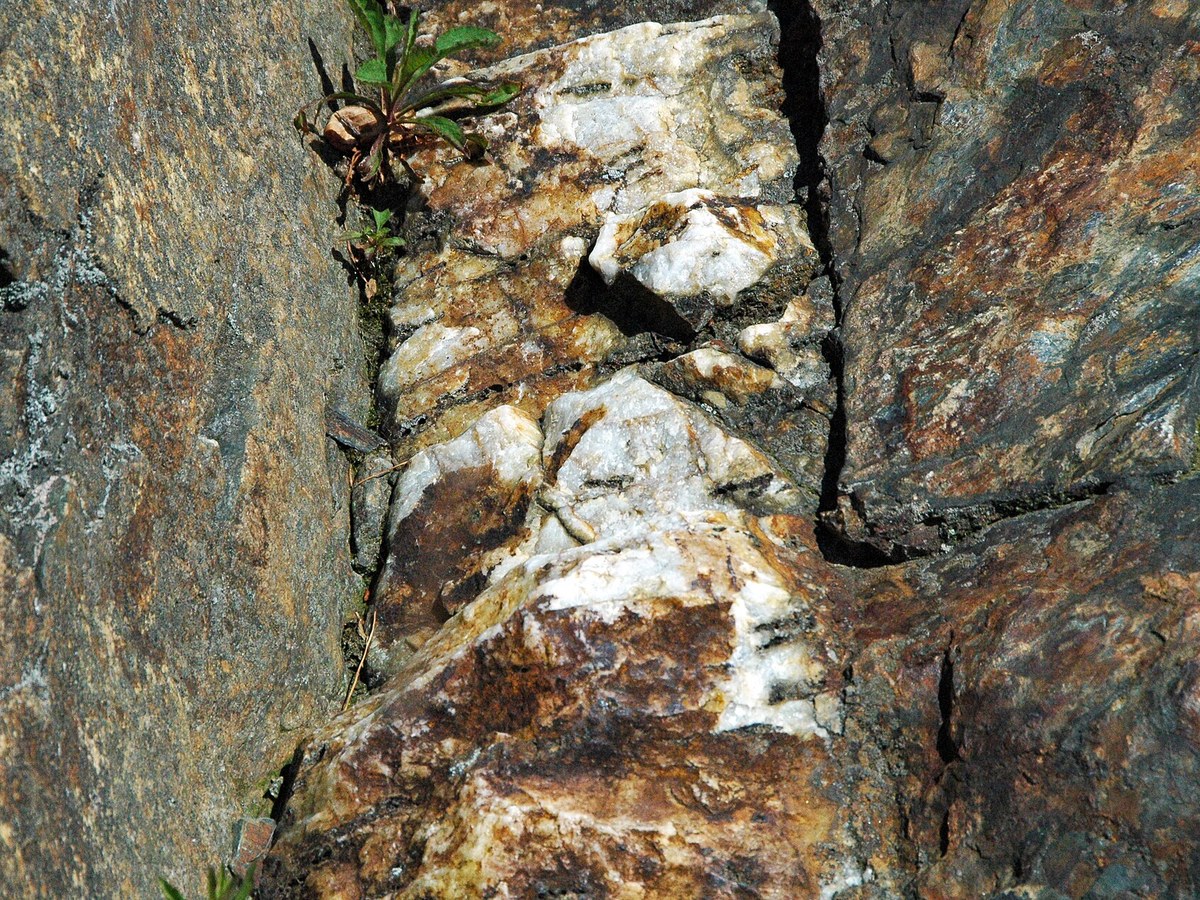
Quartz resists weathering extremely well. As rocks break down, other minerals dissolve or turn to clay, while quartz survives as sand grains. That is why most beach and desert sand is quartz. When those grains are compacted and cemented they become sandstone, and when sandstone recrystallises under heat and pressure it becomes quartzite.
Brazil is the most important source of natural quartz crystal. Arkansas (USA), the Swiss Alps and Namibia are other notable sources. Collectors most prize clear, double-terminated crystals from Alpine-type clefts.
Where Quartz Is Found in Britain
In Britain quartz matters in two quite different ways: as silica sand for industry, and as a collector’s and jeweller’s stone, above all Scotland’s smoky quartz.
- Silica sand: high-purity quartz sand used mainly for glass and foundry work. According to the British Geological Survey, around 40 UK quarries produce some 4 million tonnes a year, from deposits such as the Woburn Sand Formation at Leighton Buzzard, Bedfordshire, and the sandstones near Mansfield.
- Cairngorm: the Scottish name for dark smoky quartz from the Cairngorm Mountains, designated Scotland’s national gemstone. Genuine Scottish material is now scarce; the name is widely used in the trade for smoky quartz from Brazil or Madagascar.
- Vein quartz: milky quartz veins are common in the older rocks of Wales, Cornwall and the Scottish Highlands; at Dolaucothi they carried the gold the Romans mined.
How to Tell Real Quartz
- It scratches glass: at Mohs 7, quartz scratches glass (about 5.5); a penknife will not scratch quartz.
- It breaks like glass: quartz has no cleavage; it fractures into curved, shell-like (conchoidal) surfaces.
- Crystal shape: natural crystals are six-sided prisms ending in a point, with fine horizontal lines across the prism faces.
- Inclusions: natural quartz usually shows cloudiness, tiny fractures or inclusions of other minerals. A perfectly flawless “crystal” with bubbles may well be glass.
For how to tell real quartz from glass in a finished piece, see our guide to quartz jewellery.
Uses of Quartz
Quartz’s value is not only in its looks: its resistance to heat and chemicals, its hardness and its piezoelectric behaviour make it an important mineral in daily life and industry.
- Electronics and timekeeping: high-quality quartz crystals control frequency in watches, computers, mobile phones and communication equipment.
- Glass and special glass: its silica content makes it the raw material for glass, optical products and heat-resistant fused quartz.
- Foundry and abrasives: its resistance to heat and chemicals makes quartz sand useful in foundries and some abrasive products.
- Jewellery and ornamental stone: amethyst, citrine and rose quartz are used in jewellery and decoration.
- Technology and energy: high-purity quartz is used to make the materials behind silicon, fibre optics and solar panels.
Quartz also plays a part in natural cycles beyond human use: the breakdown of rock, the formation of soil and the minerals carried by rivers. That a natural mineral interacts with its surroundings should not, however, be read as a medical treatment or a proven health benefit.
Frequently Asked Questions
What is quartz?
Quartz is a mineral made of silicon and oxygen (SiO₂). After feldspar it is the most abundant mineral in the Earth’s crust, with a Mohs hardness of 7.
What is quartz used for?
Quartz sand goes into glass, foundry work and construction; high-purity quartz into silicon, fibre optics and solar panels; quartz crystal controls frequency in watches and electronics. Amethyst, citrine and rose quartz are gemstones.
Where is quartz found?
In igneous rocks such as granite, in metamorphic rocks, in hydrothermal veins and in sand. In Britain, silica sand is quarried at sites such as Leighton Buzzard in Bedfordshire, and smoky quartz is found in Scotland’s Cairngorms.
Can quartz contain gold?
Some quartz veins do, most do not. Gold usually lies along fractures and grain boundaries in the quartz, or inside pyrite as invisible particles. Shiny yellow grains in quartz are most often pyrite.
Are quartz and quartzite the same?
No. Quartz is a mineral; quartzite is a rock formed when quartz-rich sandstone recrystallises under heat and pressure. Quartzite is made almost entirely of quartz grains.
Photos: Thomas Bresson (CC BY 3.0), James St. John (CC BY 2.0), Mister rf (CC BY-SA 4.0), Pseudopanax (public domain) — Wikimedia Commons.
Sources
- U.S. Geological Survey – Quartz
- Goreva, Ma & Rossman (2001), Fibrous nanoinclusions in massive rose quartz, American Mineralogist
- USGS – Formation mechanisms of quartz veins in orogenic gold deposits (Grass Valley)
- Geological Conservation Review – Dolaucothi Mine
- National Trust – History of Dolaucothi
- British Geological Survey – Silica sand mineral planning factsheet
- National Museums Scotland – The history and science of Cairngorm quartz