
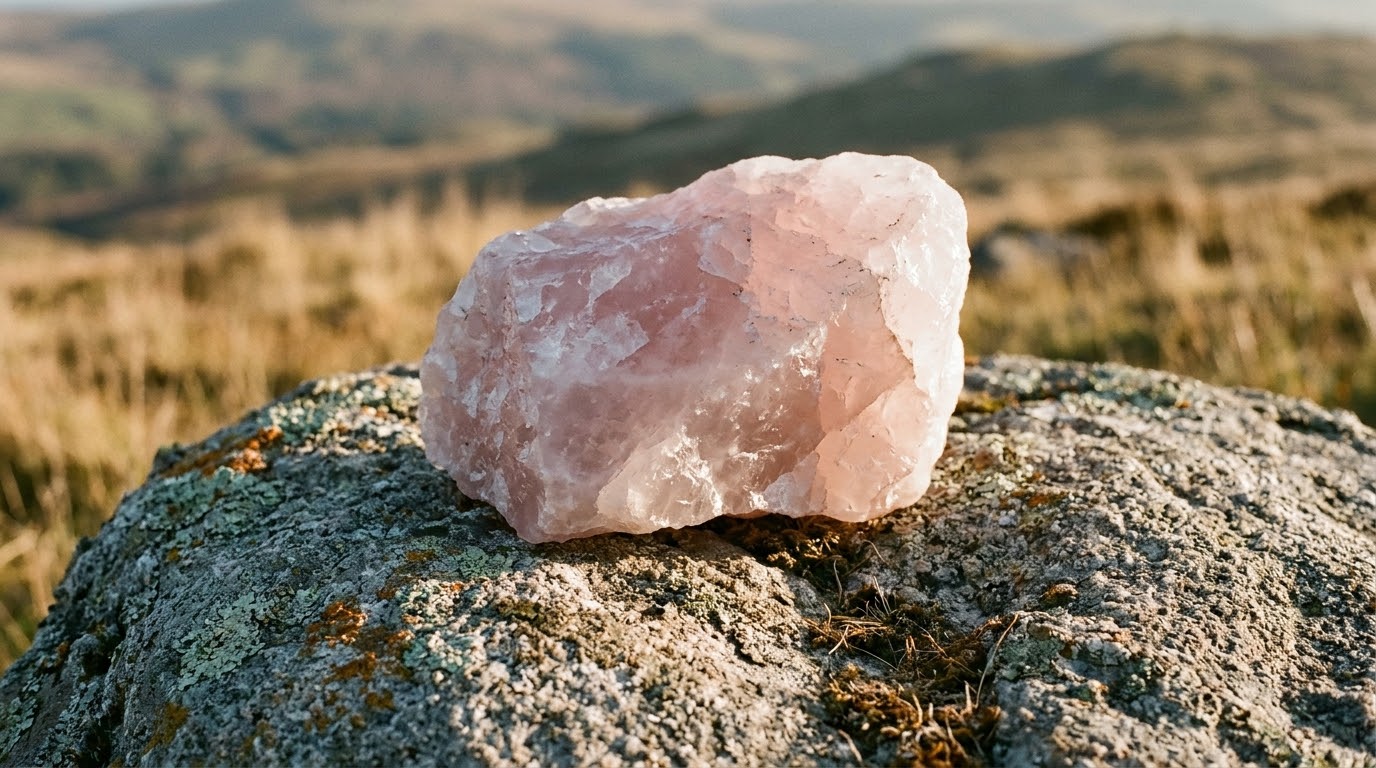
Rose quartz is the pink, milky variety of quartz — the same mineral as rock crystal and amethyst, coloured not by a pigment of its own but by microscopic fibres trapped inside it. Its colour is pale, its price is low and its reputation is large: this is the stone sold as the “love stone”.
This guide explains what the love-stone name means, what the stone is made of, why it is pink, where it comes from, how to tell a natural piece from glass or dyed quartz, whether it can go in water, and what drives its price.
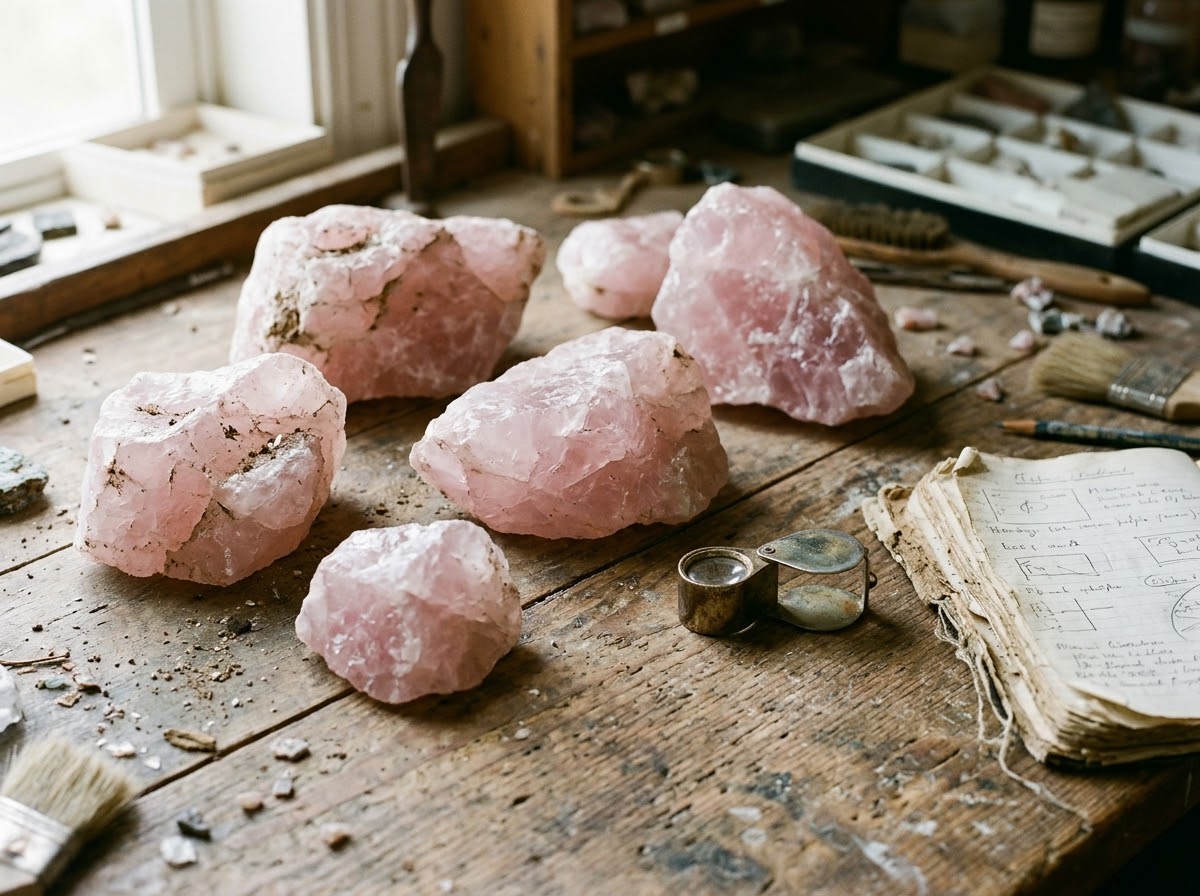
What does rose quartz mean?
In crystal-healing traditions rose quartz is known as the love stone. It is said to stand for love, tenderness and self-acceptance, to be connected with the heart chakra, and some astrology writers list it as the stone of Taurus and Libra. These are beliefs held within those traditions, and different writers describe them in different terms.
What the stone actually is
Rose quartz is not a separate mineral. It is quartz — silicon dioxide, SiO₂ — in a pink variety, with a hardness of 7 on the Mohs scale, a density of about 2.65 g/cm³ and a refractive index between 1.544 and 1.553. What separates it from rock crystal, amethyst or smoky quartz is colour and habit: it almost never forms crystals with faces, and instead appears as translucent masses inside coarse-grained rocks.
| Property | Value |
|---|---|
| Mineral | Quartz (pink variety) |
| Chemical formula | SiO₂ (silicon dioxide) |
| Source of colour | Microscopic fibres of a dumortierite-like mineral |
| Crystal system | Trigonal |
| Hardness (Mohs) | 7 |
| Specific gravity | 2.65 |
| Refractive index | 1.544 – 1.553 |
| Colour | Very pale pink to rose pink; usually cloudy |
| Transparency | Translucent; transparent material is rare |
| Visible optical effect | Six-rayed star (asterism) in some cut stones |
For the mineral as a whole and its other varieties, read what quartz is, its properties and varieties.
Why is rose quartz pink?
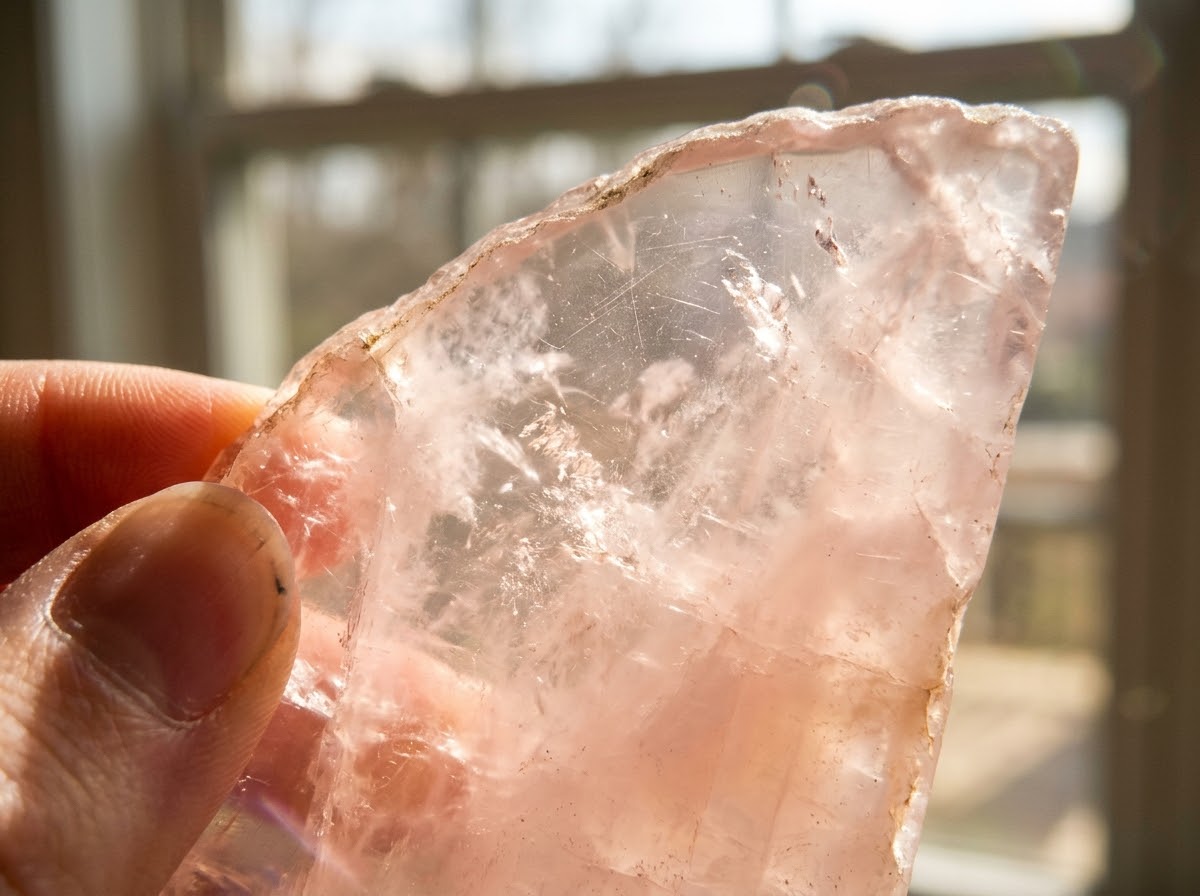
Not from titanium, iron or manganese on their own, as was long assumed. In 2001 a team publishing in American Mineralogist dissolved rose quartz samples from 29 deposits around the world in hydrofluoric acid. What remained were pink fibres between 0.1 and 0.5 micrometres thick — a fraction of the width of a human hair — and those fibres carried the colour.
The fibres resemble the mineral dumortierite without matching it exactly, which is why the literature describes them as dumortierite-like; a follow-up paper in the same journal in 2002 set out where the measurements diverge. The pink is thought to come from a transfer of charge between iron and titanium inside the fibres. Those same fibres scatter light, which is why the stone always looks slightly cloudy, and why some cabochons cut from it show a six-rayed star.
The fibres occur only in massive rose quartz. The rare, well-formed pink crystals that collectors call pink quartz are coloured by another mechanism altogether and are far more sensitive to light.
Where rose quartz is found
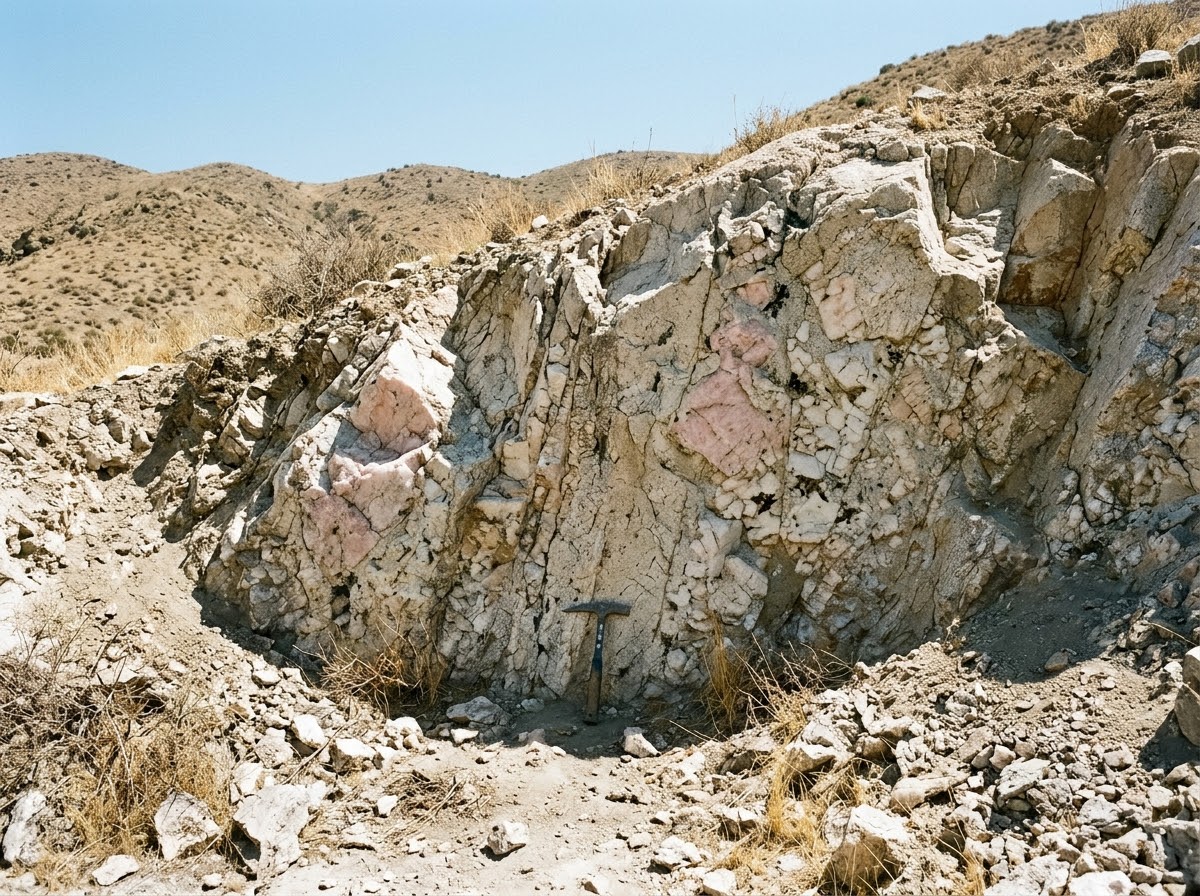
It grows mostly in pegmatites, the coarse-grained rocks that crystallise at the end of a magma’s cooling, where masses several metres across can sit in the core of the vein.
Most commercial rose quartz comes from Brazil, above all from Minas Gerais. Madagascar supplies clearer material and much of the star rose quartz. The Black Hills around Custer, South Dakota, are famous enough that rose quartz became the state mineral in 1966, and Namibia is also counted among the sources.
In Britain the stone is a collector’s curiosity rather than a commercial one. The Cornish Mineral Reference Manual (Golley and Williams, 1995) records rose quartz at Buckett’s Mine near Redruth, and the polished pieces sold in British shops are imported.
Natural, glass or dyed?
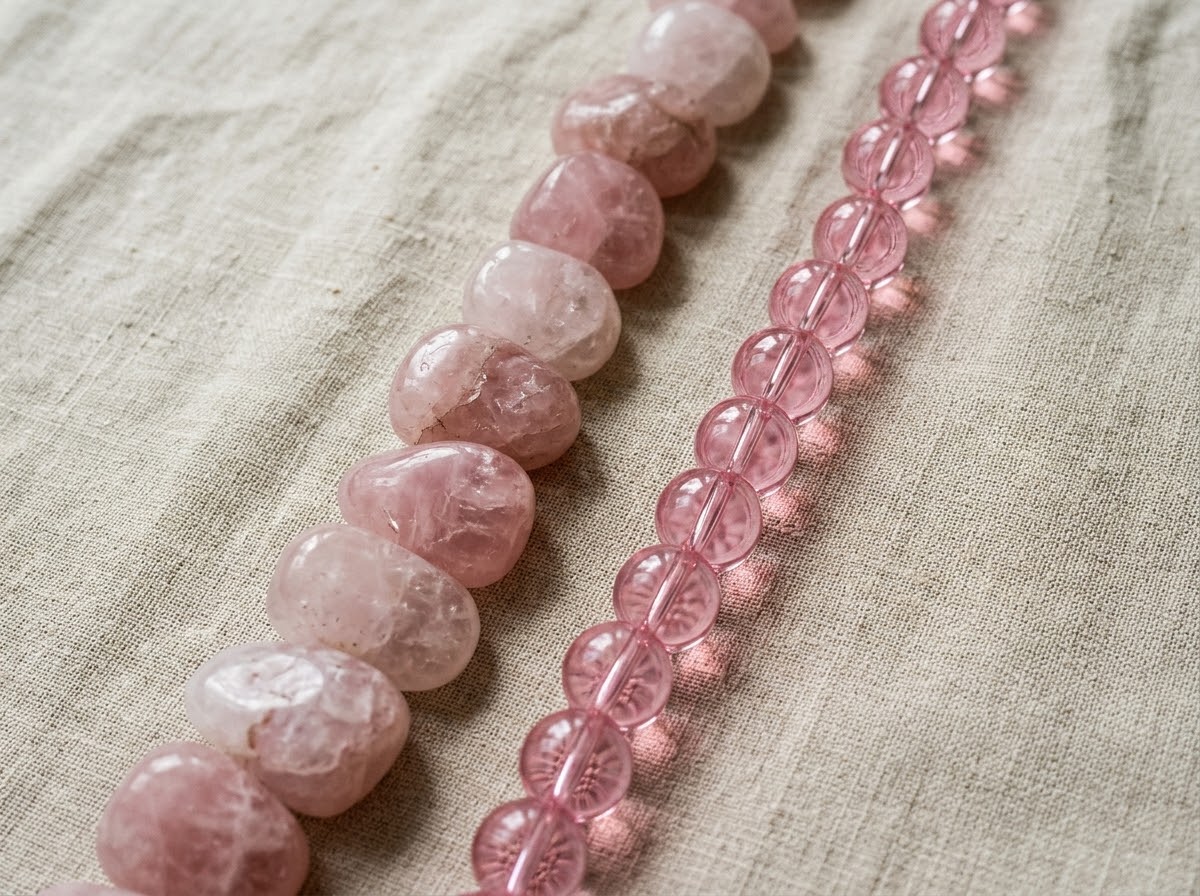
Because rose quartz is cheap, the commonest imitation is pink glass, followed by colourless quartz dyed pink. Neither is hard to spot with a loupe.
| Check | Natural rose quartz | Pink glass | Dyed quartz |
|---|---|---|---|
| Colour | Soft and pale, slightly uneven | Usually perfectly even and vivid | Too vivid; darker in cracks and holes |
| Appearance | Milky, cloudy | Clear, or artificially frosted | Colourless quartz may show underneath |
| Under a loupe | Small fractures and cloudy patches | Round air bubbles and flow lines | Dye collects along fractures |
| Hardness | 7: steel will not scratch it | About 5.5: steel can scratch it | 7 |
| Price | Inexpensive, but not absurdly so | Suspiciously cheap | Variable |
Other pink stones are sometimes sold in its place: rhodochrosite (banded in light and dark pink, much softer), rhodonite (pink with black veins), kunzite (transparent, lilac-pink) and morganite (transparent, peach-pink). Test hardness only on a hidden corner of a rough piece — scratching a polished stone or a piece of jewellery ruins it.
Can it get wet, and does it fade?
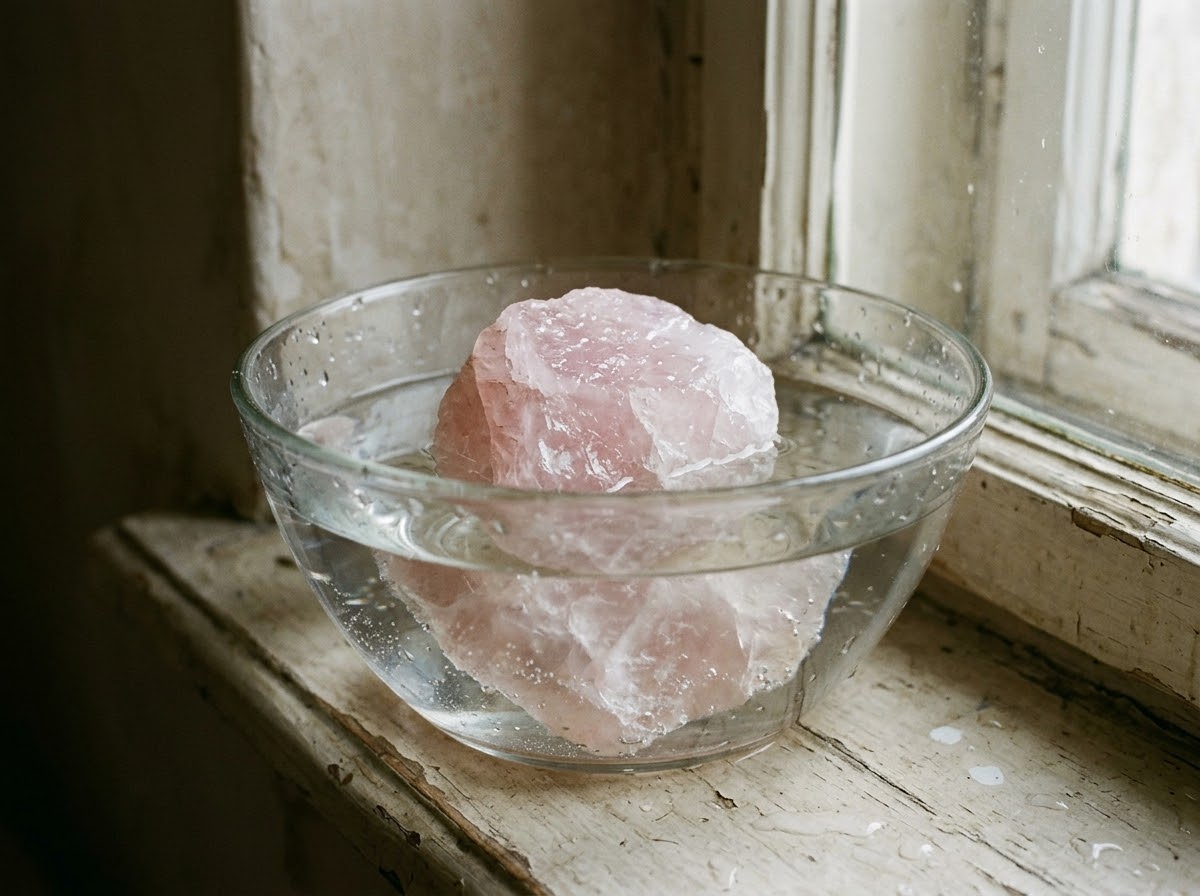
Yes, it can get wet. Quartz does not dissolve in water and a hardness of 7 means a short soak does no damage; warm water with mild soap and a soft cloth is enough to clean it. Do not leave pieces with deep fractures soaking, or jewellery where the stone is glued into its setting, and avoid boiling water and steam, because sudden changes of temperature can crack quartz.
Sunlight is a different matter, and the answer depends on which material you have. Mineralogical sources describe the colour of massive rose quartz as reasonably stable in light, while the rare pink quartz crystals fade quickly. Some collectors report that ordinary rose quartz lightens after years on a sunny windowsill, so keeping it out of continuous direct sun is a sensible precaution.
What drives the price
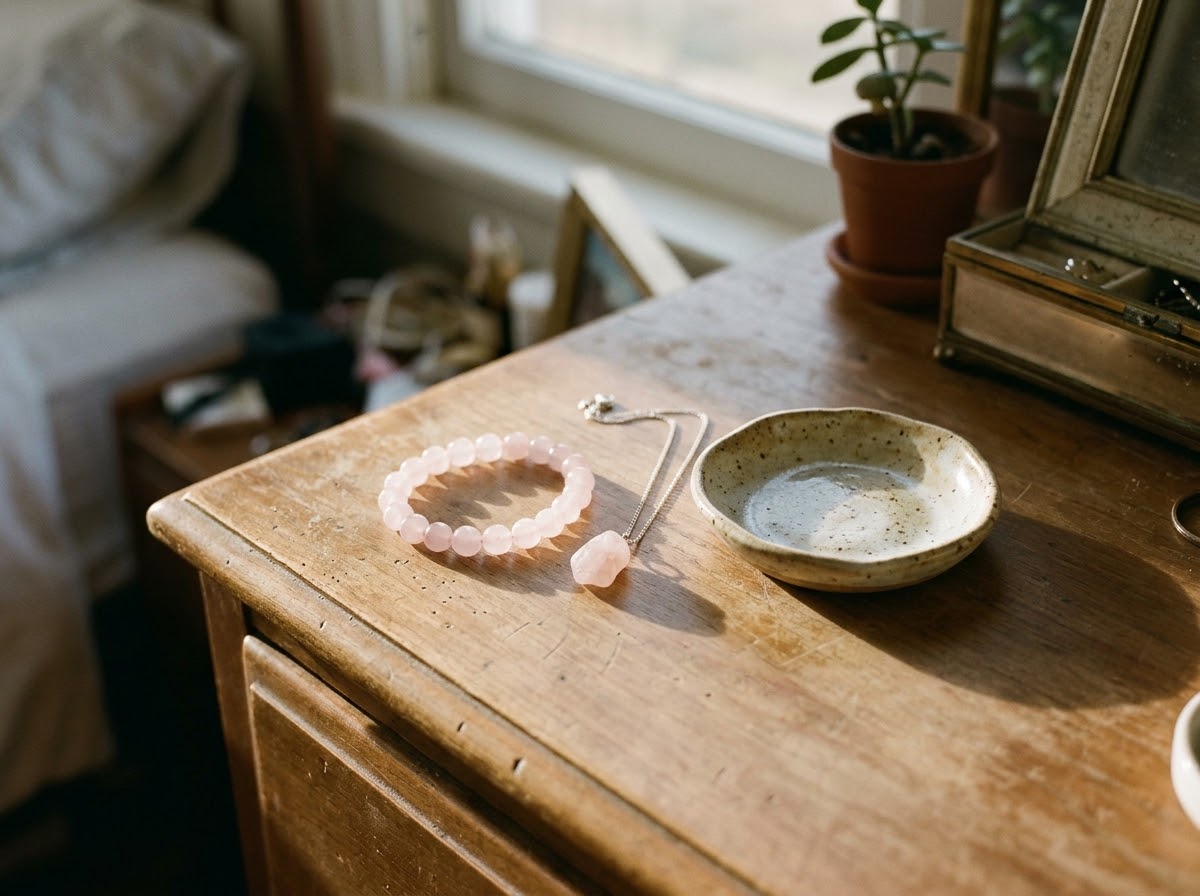
Rose quartz is one of the cheapest stones in the quartz family, and the price follows size, transparency, the depth and evenness of the colour, the cut and the work. A large clean cabochon or a carved sphere costs many times a small tumbled stone, and in silver jewellery most of what you pay is metal and labour rather than the stone itself. If you are choosing a finished piece, our quartz jewellery and accessories show the range.
Care
- Clean with warm water, mild soap and a soft brush, rinse well and dry with a soft cloth.
- Skip steam cleaners, boiling water and sudden temperature changes: they can crack the stone.
- Do not leave it for years on a sunny windowsill; the colour is more stable than that of pink quartz crystals, but it is not immortal.
- Store it apart from harder stones such as sapphire, in its own soft pouch, so that it does not get scratched.
The violet member of the same family is covered in our article on amethyst, and the brown-grey one in smoky quartz.
Frequently asked questions
What does rose quartz mean?
In crystal-healing traditions it is called the love stone and is said to represent love, tenderness and self-acceptance, and to be linked with the heart chakra.
Is rose quartz a crystal?
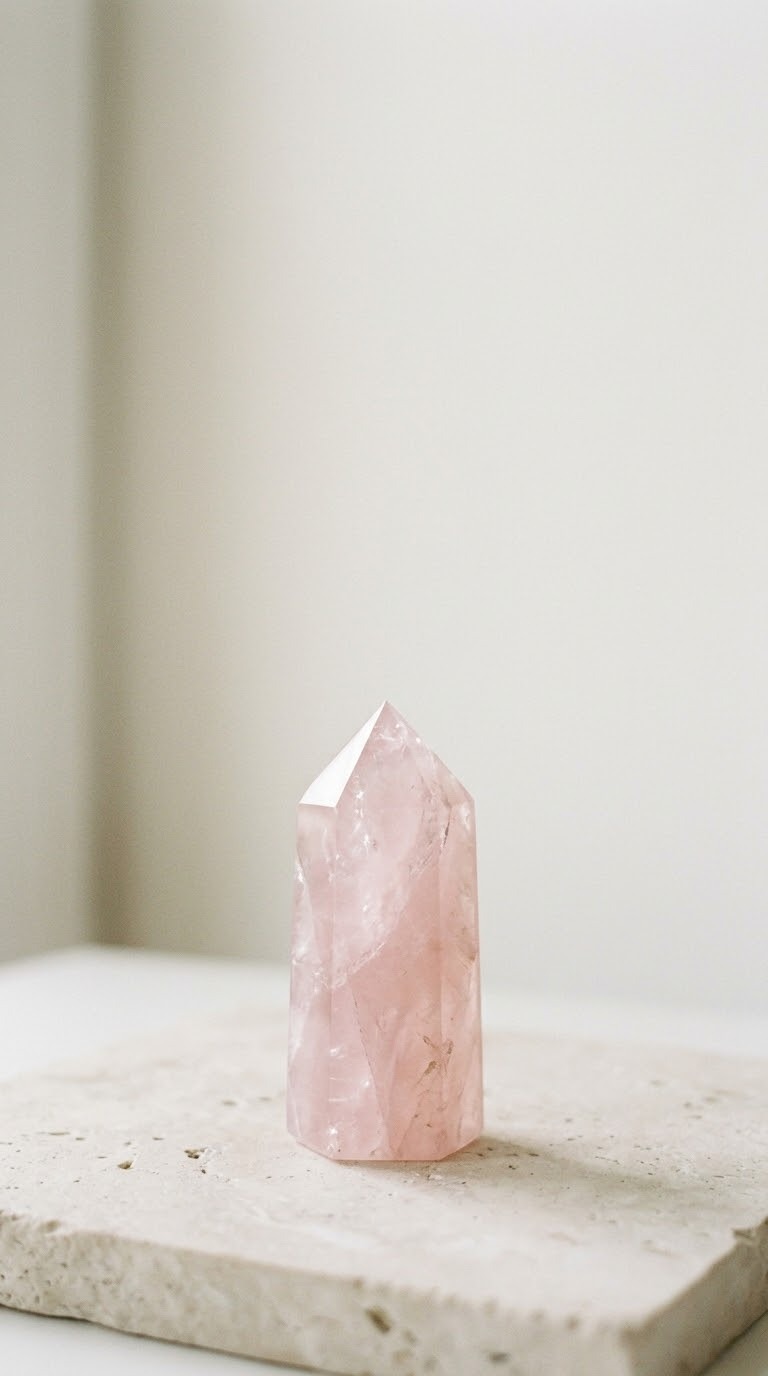
It is quartz, but it rarely forms crystals with faces. Most rose quartz is massive: translucent lumps inside pegmatites. Well-formed pink crystals exist, are rare, and are known to collectors as pink quartz.
How can I tell natural rose quartz from glass?
Natural stone is pale and milky, with small fractures visible under a loupe and a colour that is rarely perfectly even. Pink glass is usually uniform in colour, may contain round air bubbles, and is softer: about 5.5 on the Mohs scale, so steel can scratch it.
Does rose quartz fade in sunlight?
Massive rose quartz is reasonably stable in light; the rare pink quartz crystals fade quickly. Some collectors report slow lightening in ordinary rose quartz after years of direct sun, so keep it out of continuous sunlight.
Can rose quartz go in water?
Yes. It does not dissolve in water and can be cleaned with warm soapy water. Avoid prolonged soaking of cracked pieces and glued settings, and never use boiling water or steam.
Is rose quartz expensive?
No. It is one of the least expensive quartz varieties; price rises with size, transparency and evenness of colour, and in finished jewellery the metal and labour usually cost more than the stone.