
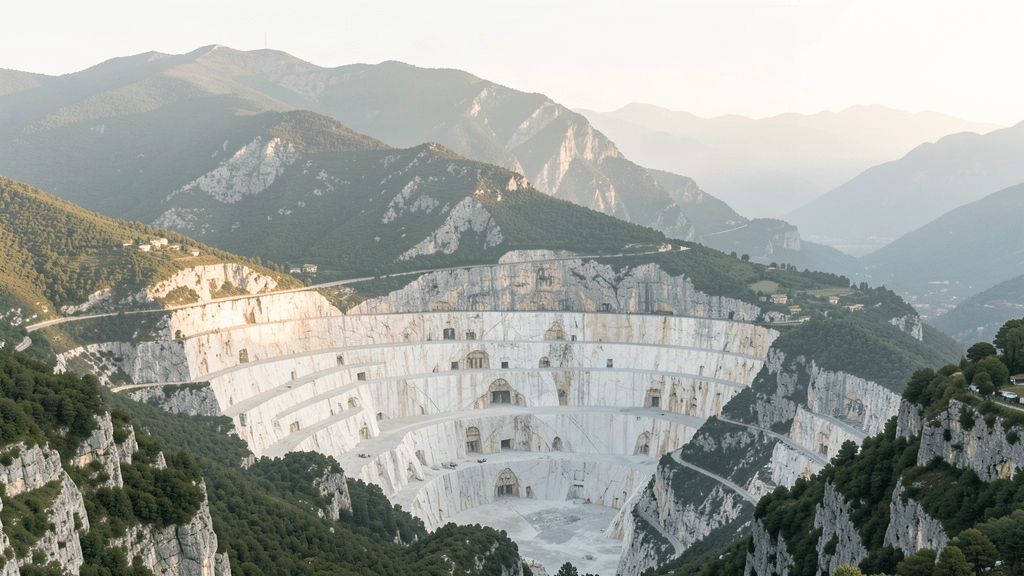
Carrara is often introduced through a single colour: white. Yet the Tuscan city is more than the source of a famous building material. At the foot of the Apuan Alps, marble shapes the landscape, the local economy and the visual identity of the place. Here, stone is not simply extracted from the mountains; it has become part of how the surrounding communities understand their home.
A city between mountains and sea
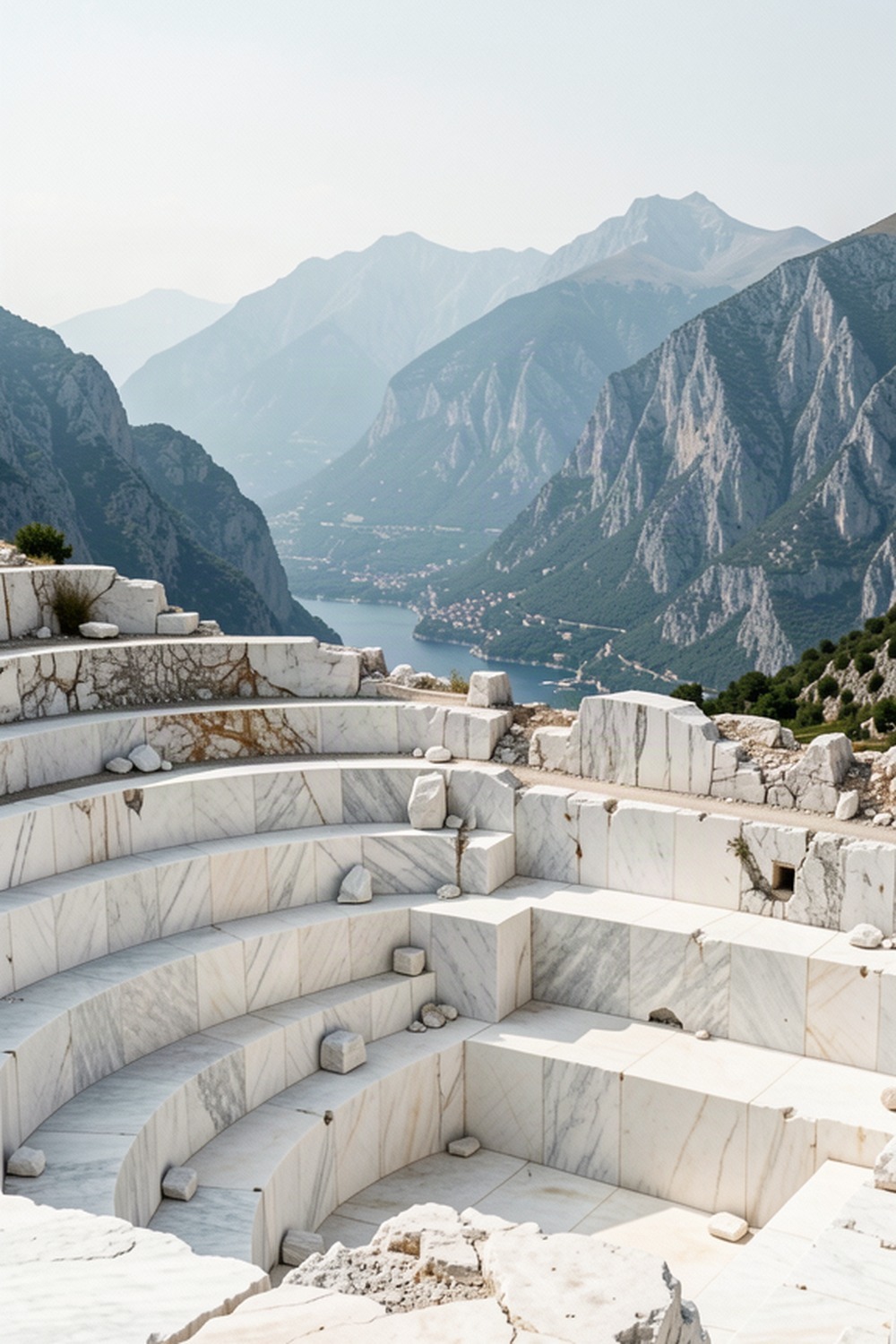
Carrara lies in Tuscany, in central Italy, close to the Ligurian Sea and roughly 100 kilometres west-northwest of Florence. The city sits along the Carrione River, while the marble-bearing slopes rise behind it. This meeting of steep mountains, valleys and coastal routes helped connect the quarries with workshops and ports for centuries.
The local marble is best known for its pale white appearance, although Carrara also produces varieties with blue-grey tones and visible veining. These differences are not merely decorative. They reflect variations in the stone’s mineral structure and in the geological history of the Apuan Alps.
When geology becomes culture
Marble is a metamorphic rock formed when limestone is transformed by heat and pressure. In Carrara, that geological process created a material that can be cut and polished to a smooth, luminous surface. Human beings later gave the stone new meanings through architecture, sculpture and civic monuments.
Quarrying in the area reaches back to Roman times. Over the centuries, blocks travelled from the mountain valleys towards the coast and then to distant building sites. Artists and architects valued the stone not only for its strength, but also for the way it catches and reflects light. The contrast with Iceland’s basalt columns shows how different geological processes can give landscapes their own visual language. The history of Carrara therefore links a very old natural process with a long tradition of human craftsmanship.
The cost of a beautiful landscape
The quarries also raise an important question: how should a community balance cultural heritage, employment and the protection of mountain landscapes? Every extraction site changes the shape of the rock face, affects transport routes and demands careful management of waste and water. Carrara’s story is therefore not only about artistic beauty. It is also about the responsibility that comes with using a finite natural resource.
Seen from the city, the Apuan Alps remind us that stones have a geography. From Carrara marble to the colour play of opal, the identity of a stone is inseparable from the conditions that formed it. Carrara marble carries the identity of a particular valley, a particular mountain range and a particular coastal town. Its journey from rock to sculpture may cross continents, but its story begins in this landscape.